
Water Crisis Threatens Stability for Jebel al-Amour Returnees
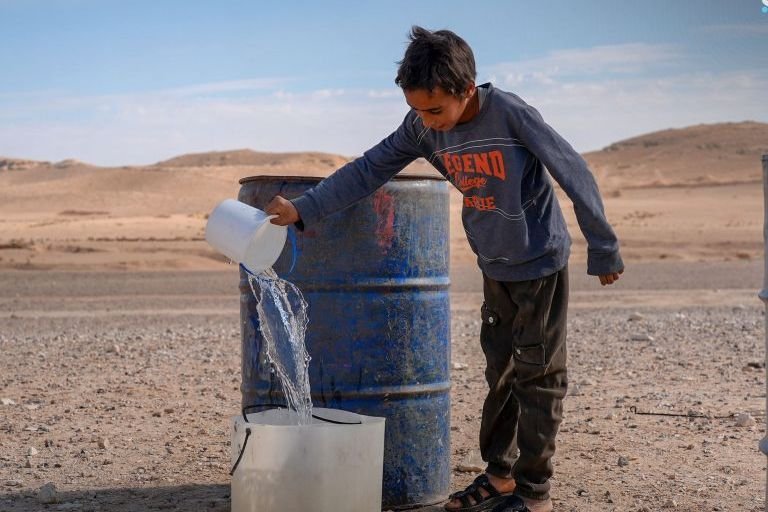
Residents returning to their homes in the Jebel al-Amour region of the Homs desert are facing mounting difficulties in securing basic necessities, primarily drinking water. The ongoing water crisis has emerged as the most significant obstacle to the stability of families who have recently moved back to the area, which is located in the vicinity of Palmyra in the eastern Homs countryside.
The crisis is largely driven by frequent malfunctions in the local artesian wells and their pumping systems, which have deprived the population of a reliable and sustainable water source. Residents report that they are frequently forced to travel long distances, sometimes up to 35 kilometers, to reach water sources in the Wadi al-Abiad area. Compounding this challenge, the water obtained from these distant sources is often unsuitable for drinking and can only be used for purposes such as watering livestock or washing.
Local families stated that well malfunctions have become a recurring issue, requiring repairs every 15 to 20 days. These constant breakdowns place an additional financial burden on the returnees, who must cover the costs of repairs, fuel, and lubricants necessary to operate the pumps.
Mohammad Turki al-Sultan, a returnee who has resumed sheep farming in the area, noted that residents primarily rely on tractors to transport water from wells located more than 20 kilometers away. He highlighted the absence of any fixed or sustainable water infrastructure. Many residents have expressed concerns that these harsh living conditions could jeopardize their efforts to return to their normal lives and stabilize their households in their home villages.
The challenges facing the community extend beyond the water shortage. Residents pointed to a lack of other essential services, noting the absence of schools for their children and the urgent need for comprehensive repairs to many homes that were damaged during previous years. The inhabitants of Jebel al-Amour are calling on humanitarian organizations and relevant authorities to intervene, urging them to assist in rehabilitating damaged homes, securing sustainable energy sources to ensure the continuous operation of wells, and improving the broader infrastructure and essential services needed to support the local population.
Jebel al-Amour is a vast mountainous and desert region in the Syrian Badia, renowned for its rich pastures. It serves as a primary destination for nomadic tribes and local communities whose livelihoods depend largely on livestock breeding and agricultural activity. While residents emphasize that improved security conditions served as the primary motivation for their return, they maintain that addressing these service-related crises has now become an urgent requirement to ensure the long-term sustainability of their return to the region.
Source: Syria Focus Arabic
