
Syria Records 7 Million Border Crossings in First Half of 2026
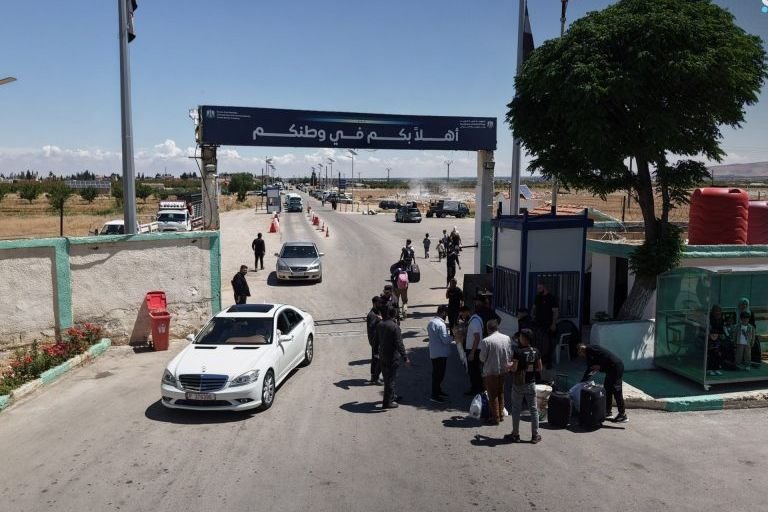
Syria’s border crossings experienced a marked increase in activity during the first six months of 2026, reflecting a growing role in regional transportation, trade, and passenger transit. Official data released by the General Authority for Borders and Customs indicates that the total number of travelers crossing through land borders with Lebanon, Jordan, Turkey, and Iraq reached approximately 7.069 million during the first half of the year.
Lebanon accounted for the highest volume of transit, with 2.47 million passengers recorded. Within this sector, the Jdeidet Yabous crossing in Rif Dimashq remains the primary gateway, handling 1.7 million passengers. The Jousiyah crossing in Homs followed with 625,000, while the Jiser Qamar and Arida crossings also contributed to the total movement of people. Authorities have noted that this volume of traffic coincides with ongoing efforts to rehabilitate and modernize the infrastructure at these facilities to improve operational efficiency.
The Nasib border crossing with Jordan maintained its strategic importance, facilitating the movement of 2.2 million travelers. As a vital land route, Nasib serves as a critical link for travelers and freight bound for Saudi Arabia, particularly during the Umrah season, and remains a cornerstone for commercial trade between Syria, Jordan, and the Gulf nations.
Traffic along the Syrian-Turkish border reached 2.013 million passengers. The Al-Salama crossing in Aleppo reported the highest activity at 1.04 million travelers, followed by Bab al-Hawa in Idlib with 500,000. Other crossings, including Al-Ra’i, Kassab, Tal Abyad, and Jarablus, handled the remaining passenger volume. Ongoing development projects and infrastructure expansions are currently underway at both Al-Salama and Bab al-Hawa to manage the steady flow.
Movements across the border with Iraq have shown signs of recovery in logistics and transit. With a total of 386,000 passengers recorded, the border has seen renewed momentum, particularly at the Al-Tanf crossing, which reopened in April. Al-Tanf alone facilitated the movement of 155,000 drivers involved in cross-border transport. This upward trend in transit is largely attributed to the resumption of overland crude oil shipments from Iraq to the Baniyas refinery on the Syrian coast, along with active transit through the Albu Kamal, Simalka, and Al-Ya’rubiyah crossings.
Beyond transit and trade, the first half of 2026 saw 391,000 instances of voluntary refugee returns. The Jousiyah crossing recorded the highest number of returnees, totaling over 150,000 individuals. Other significant numbers of voluntary returns were processed through Al-Salama, Bab al-Hawa, Jdeidet Yabous, and Nasib. These figures underscore a continued trend of returnees utilizing multiple border points depending on their proximity to their previous locations in neighboring host countries. The General Authority for Borders and Customs continues to prioritize the integration of these logistical improvements to support both civilian movement and the expansion of national transport capabilities.
