
Second Phase of Drinking Water Network Project Begins in Al-Dumayr
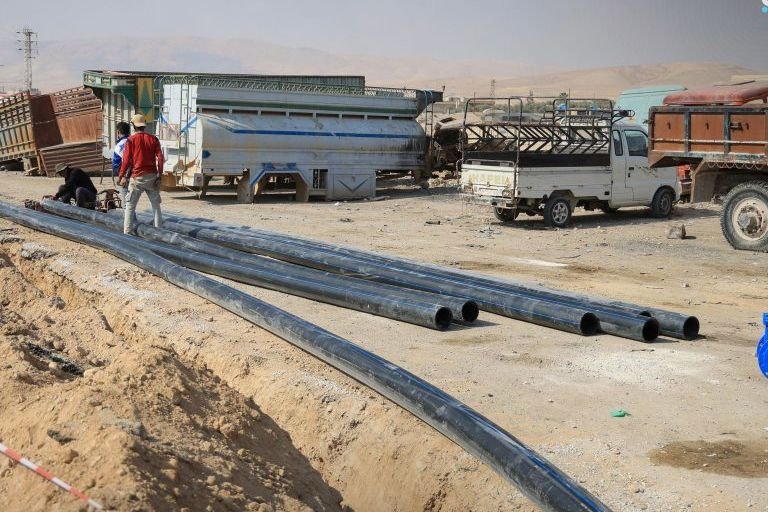
The Public Establishment for Water and Sanitation in Rif Dimashq, in collaboration with the Syrian Arab Red Crescent and the International Committee of the Red Cross, has officially begun the implementation of the second phase of a project to develop and expand the drinking water network in the city of Al-Dumayr.
This technical phase involves the excavation and installation of a 600-meter-long water pipeline with a diameter of 200 millimeters. The new line will extend from the Sheikh Akashi cemetery to the Al-Ruhayba roundabout. This vital infrastructure project aims to connect the water networks of the city’s eastern and western neighborhoods. By establishing this link, the project will directly contribute to improving water supply efficiency and addressing the water shortage issues that have impacted residents in the Sheikh Akashi neighborhood.
Ali Sharaf al-Din, head of the Al-Dumayr Water Unit, emphasized that the project’s scope extends beyond simply improving water pressure for existing neighborhoods. It also includes extending the drinking water network to new residential buildings located along the Al-Ruhayba road. This expansion will provide residents in those areas with the opportunity to officially subscribe to the service, ensuring a stable and reliable supply of water.
Construction works for this phase are expected to be completed within approximately one month. This development serves as a continuation of efforts from the project’s first phase, which included equipping the third well in Mount Abu Qaws and constructing a 500-meter-long pumping line. To ensure the continuity of water pumping despite operational challenges, the establishment has integrated a hybrid power system into the project, utilizing a combination of solar energy, electricity, and diesel to power the facilities.
These initiatives are part of a broader strategy adopted by relevant authorities to develop the drinking water infrastructure in Rif Dimashq. The overarching goal is to increase the efficiency of existing networks and enhance their capacity to meet the growing needs of the population. By expanding transmission lines and creating direct links between neighborhoods, the project seeks to ensure the sustainability of water resources and their equitable distribution among the residents.
Source: Syria Focus Arabic
