
Roman and Byzantine Tombs Discovered in Raqqa Province
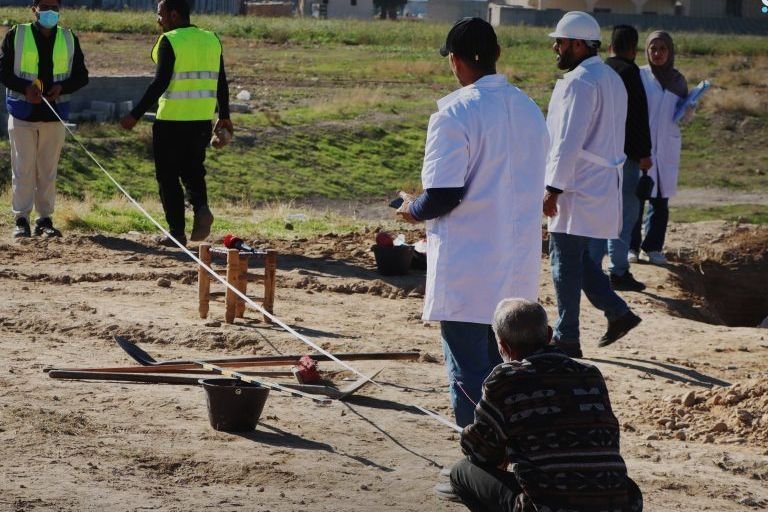
Emergency archaeological excavations at the Al-Durra site in the countryside of Raqqa have uncovered a series of burial sites dating back to the Roman and Byzantine eras. The discovery, located within the scope of the ancient city of Sura, provides significant new data regarding the funerary customs and burial practices that were prevalent during that historical period.
Jabbar Al-Abdullah, Director of the Antiquities and Museums Department in Raqqa, stated that the excavation work commenced on the 11th of this month. The site is located west of the Al-Hammam area and maintains a close historical connection to the city of Sura. According to initial findings, the team has identified dual-occupancy tombs, with the potential for discovering triple or quintuple burial chambers as the excavation process continues.
These tombs are part of an extensive funerary complex spanning an area of approximately 20 dunums. The site is situated along the northern bank of the Euphrates River and the Aleppo-Raqqa road to the south. Al-Abdullah noted that the artifacts exhibit a unique architectural style characterized by layers of fine plaster and precise finishing touches. These features support the hypothesis that the site was reserved for individuals of high social status during that era. Furthermore, he suggested that those buried at the site may not necessarily have been local residents, but rather people who arrived from the city of Sura or from other nearby colonies and archaeological sites that have not yet been fully uncovered.
Regarding future protection and research initiatives, Al-Abdullah emphasized that expanding the excavation requires additional resources and favorable weather conditions. Plans are currently underway to launch a larger project next summer, which will involve a team of specialized archaeologists and technicians. To ensure the site’s security, the relevant authorities are coordinating with the Ministry of Interior to maintain round-the-clock protection. Efforts are also being made to raise community awareness about the importance of preserving this heritage, which holds scientific and historical value that could eventually contribute to the development of cultural tourism in the province.
Archaeologist Yasser Al-Mahrab noted that these discoveries provide vital evidence regarding lifestyle patterns and funerary rituals. He added that studying the architectural characteristics of the tombs will help build a clearer picture of the historical relationship between the Al-Durra site and the city of Sura. Al-Mahrab confirmed that current efforts are focused on the immediate site, with future plans to expand the archaeological survey to surrounding areas. This research aims to further the understanding of human settlement and civilization in Raqqa province across various historical ages.
Source: Syria Focus Arabic
