
Photo Project Explores Global Shipping and Labor Realities
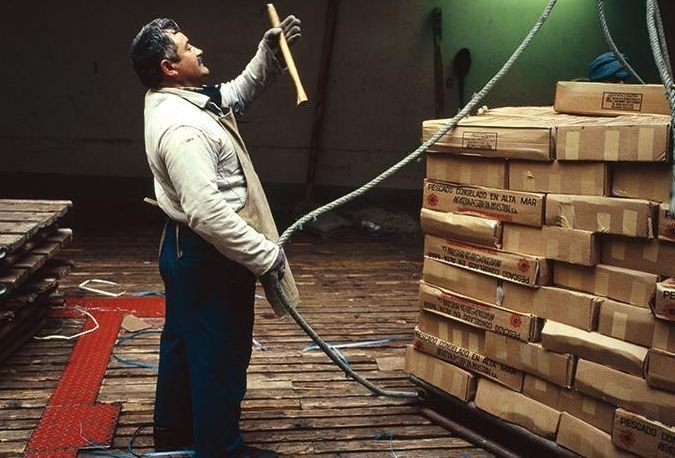
The art project “Fish Story,” created by the late American photographer Allan Sekula, sheds light on the hidden dimensions of the global trade and maritime shipping systems. The work offers a critical examination of the shifts in globalization from the perspective of the laborers who serve as the backbone of the industry.
Currently on display at the Wallach Art Gallery at Columbia University in New York, the project provides a comprehensive visual and textual documentation of Sekula’s experiences spanning seven years, between 1988 and 1995. During this period, the artist traveled to several of the world’s most prominent ports—including Barcelona, Gdansk, Glasgow, Hong Kong, Los Angeles, New York, Busan, and Rotterdam—to observe the structural changes imposed by the expansion of container shipping on international trade and labor markets.
The artwork consists of nine chapters featuring 105 photographs, 26 critical essays written by Sekula, and two slide projections. Together, these materials address maritime landscapes, industrial transformations, and the decline of traditional labor roles driven by the constant search for lower-cost workers in global markets. The project goes beyond merely documenting maritime scenes; it delves into the economic structure governing these ports, exposing the significant gap between the scale of international trade and the difficult professional and social conditions faced by workers.
Media reports have highlighted the significance of the project being exhibited in its entirety in New York for the first time. The Wallach Art Gallery is borrowing the works from the Walker Art Center in Minneapolis, with the exhibition scheduled to run until December 20. Allan Sekula (1951–2013) is recognized as one of the most prominent artists to bridge photographic documentation with deep social analysis. Throughout his career, he focused on labor issues and the working class within the context of art criticism.
This project underscores the role of imagery in revealing the economic realities hidden behind the movement of ships and containers passing through global ports. As a result, it stands as a reference visual document concerning the impacts of global trade on the working classes within the maritime transport sector.
Source: Syria Focus Arabic
