New Literary Releases Enrich Syria’s Cultural Landscape
Syria’s literary scene has seen a significant influx of new publications, with local and regional publishing houses introducing a wide variety of titles. The recent releases span diverse intellectual and artistic domains, including contemporary novels, linguistic research, psychological studies, literary criticism, and children’s literature. These works, many published in 2026, reflect a growing interest in themes of freedom, dissent, existential reflection, and the preservation of Syrian cultural memory.
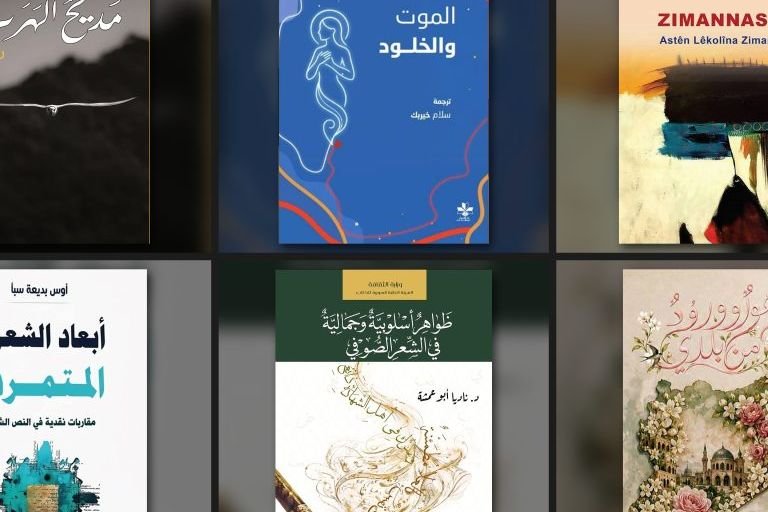
Among the notable works released is the novel “Madih al-Harab” (In Praise of Escape) by Syrian novelist Khalil al-Naimi. Published in Damascus, the novel utilizes self-fiction and intellectual meditation to examine contemporary reality and the persistent questions of human freedom and rebellion. The narrative follows a character navigating various forms of systemic hegemony and societal pressure, seeking psychological and intellectual liberation.
In the field of psychological studies, the translation of Carl Gustav Jung’s “Death and Immortality,” rendered into Arabic by Salam Khair Bek, has emerged as a key addition. Published in Latakia, the book offers an exploration of Jungian perspectives on death as a psychological phenomenon tied to inner transformation and the process of individuation. The text delves into complex concepts such as the collective unconscious and the human relationship with the passage of time.
Academic research remains a pillar of these recent developments. Syrian scholar Barzo Mahmoud has released “Linguistics: Levels of Linguistic Analysis” in Damascus. Written in Kurdish, this academic volume provides a comprehensive introduction to linguistic study, covering six core levels: phonetics, phonology, morphology, syntax, semantics, and pragmatics. By utilizing comparative examples from Kurdish and English, the author aims to standardize terminology and address gaps in existing linguistic literature.
Literary criticism is also well-represented through “Dimensions of Rebel Poetry: Critical Approaches to the Poetic Text” by critic Aws Badi’a Saba. Published in Istanbul, this collection offers analytical readings of contemporary poetry, focusing on artistic techniques and the evolving nature of resistance-themed literature. Similarly, researcher Nadia Abu Amsheh explores the aesthetic and spiritual depths of classical literature in her work, “Stylistic and Aesthetic Phenomena in Sufi Poetry.” Published by the General Syrian Book Organization, the study provides a critical application of technical construction and symbolic dimensions within the Sufi poetic tradition.
Finally, the publishing sector has paid attention to younger audiences, exemplified by the release of “Flowers and Roses from My Country” by young writer Bana Omar Abdullah. As the winner of the tenth edition of the Arab Reading Challenge in Syria, the author presents a collection of literary texts that honor the Syrian landscape, oral history, and the collective memory of the nation. These works collectively underscore the resilience and continued vibrancy of the Syrian intellectual and creative output, serving as a testament to the ongoing contributions of Syrian authors, researchers, and translators to the regional cultural discourse.
