
Latakia University Launches Smart Agriculture Course with German Partners
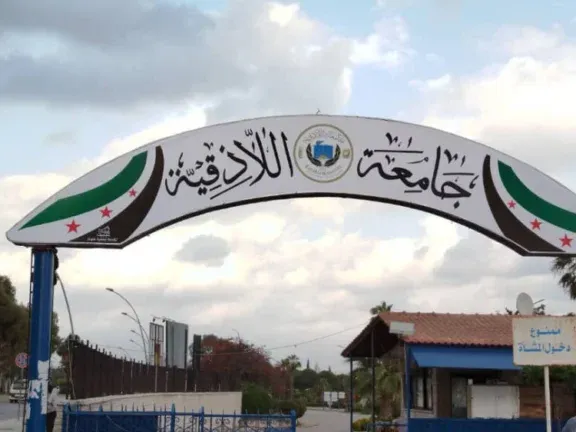
The Faculty of Agriculture at Latakia University launched an intensive training course on Sunday titled, “Smart Agriculture and Advanced Digital Technologies for Plant Protection and Sustainable Farming.” This initiative is part of an academic and research collaboration with the German Fraunhofer Institute for Computer Graphics Research, supported by the German Academic Exchange Service (DAAD).
The four-day program is being held at the university campus and is attended by approximately 80 participants, including postgraduate students, researchers, and faculty members. The lectures are being delivered by Dr. Ali Al-Masry, a senior researcher at the Fraunhofer Institute, with the participation of Syrian academic and research experts from various departments within the faculty, as well as the General Commission for Scientific Agricultural Research.
The course is divided into four thematic modules covering the latest digital agriculture technologies. The first day focuses on the foundational and conceptual aspects of precision agriculture and the role of artificial intelligence in crop monitoring. The second day addresses photographic and non-photographic sensing technologies, while the third day is dedicated to remote sensing via drones and satellites, alongside a discussion of recent scientific papers. The training program will conclude on the fourth day with a session focused on innovation and technology transfer, featuring evaluation presentations by the participating students.
Nabil Abu Kaf, Dean of the Faculty of Agriculture at Latakia University, emphasized the strategic importance of this cooperation with the Fraunhofer Institute. He stated that the primary objective is to build a long-term partnership to enhance national capabilities in digital agriculture and applied research. Abu Kaf noted that future collaboration plans include conducting joint research on multispectral LiDAR technology and early detection of plant stress. Additionally, the university aims to establish a permanent research center and launch a specialized Master’s degree program in smart agriculture.
Abu Kaf stressed that adopting these technologies has become an existential necessity for Syria in order to address the challenges of water scarcity and climate change. He noted that estimates suggest these technologies could increase the productivity of strategic crops—such as wheat, olives, and citrus—by 20 percent. Furthermore, the implementation of these practices is expected to reduce irrigation water consumption by 30 percent and lower pesticide usage by 25 percent, contributing to the creation of new job opportunities for young people in the agricultural technology sector.
The German Fraunhofer Institute is recognized as a leading European institution in applied research, providing digital and technical solutions across various sectors, including security, education, and agriculture. This scientific activity is part of broader efforts to promote international academic exchange and localize modern technology to suit the agricultural and environmental conditions in Syria.
Source: Syria Focus Arabic
