
Improved Security Encourages Population Return to Homs’ Jebel al-Amour
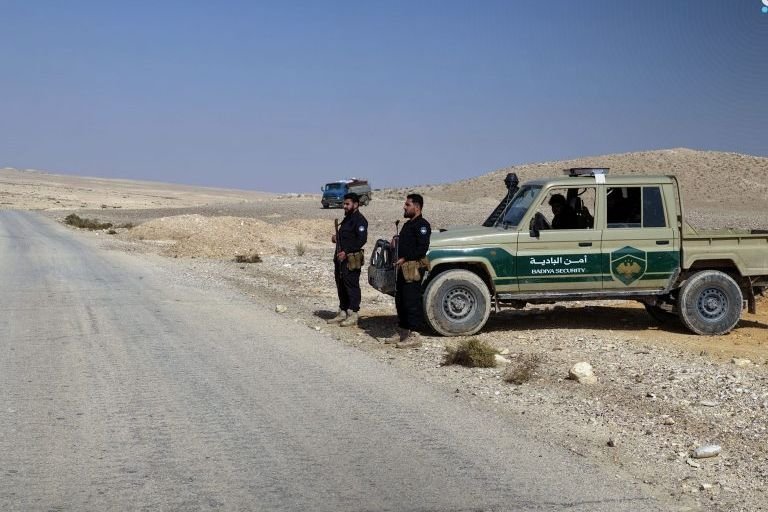
The Jebel al-Amour region and its surrounding areas in the eastern countryside of Homs have experienced a notable improvement in security conditions. This shift follows the intensification of patrols by Badiya security forces and the establishment of new security centers and checkpoints throughout the region.
Local authorities report that these measures have significantly bolstered residents’ sense of safety. This stability has encouraged a number of displaced families to return to their villages and homes. Furthermore, nomadic populations have begun returning to their traditional gathering points to resume their economic activities.
Ibrahim Ali al-Muhammad, Director of the Al-Sukhnah Security Directorate, stated that security forces are maintaining their presence through day and night patrols to protect residents and their property. He noted that these operations are being conducted despite the challenging terrain and climatic conditions in the area. In a related context, Saher Saghir, Director of the Palmyra region, emphasized the importance of this security deployment in facilitating a return to daily life. He stressed, however, that sustaining these returns requires collaborative efforts to restore essential services. Specifically, he highlighted the need for rehabilitating water wells, supporting the education sector, repairing local roads, and activating the role of civil associations to alleviate the burdens facing returning families.
Local residents have expressed satisfaction with the current situation. Reda al-Bustan, who recently returned to the area to seek grazing lands, noted that the ongoing security stability has provided residents with a sense of reassurance. His views were echoed by Khalif al-Bustan from the village of Al-Nashmi, who confirmed that residents are now able to travel freely day and night without fear. This shift has contributed to a gradual revival of agricultural and pastoral activities, which form the economic backbone of the region.
Despite these security improvements, residents continue to face significant logistical and service-related challenges. Anas al-Issa, a local resident, noted that while security patrols provide protection, they also assist in emergency medical cases and facilitate transport. However, al-Issa pointed out that the lack of basic services remains a major barrier for families considering a return. The absence of schools, weak telecommunications networks, and the breakdown of numerous water wells force current residents to travel up to 40 kilometers to secure drinking water. Furthermore, officials highlighted the persistent danger posed by landmines and war remnants, which are still discovered on an almost daily basis. They stressed an urgent need for increased clearance campaigns and public awareness programs to ensure the safety of shepherds and farmers.
Located within the Syrian Badiya near the city of Palmyra, Jebel al-Amour is a vital region known for its mountainous and desert terrain. These features historically provide vast grazing lands, making the area a primary destination for nomadic tribes and rural residents who rely on sheep herding, livestock, and seasonal agriculture. Currently, approximately 500 families are residing in the area, all looking to restore their former livelihoods.
Source: Syria Focus Arabic
