
IMF Warns Global Economy Faces Debt and Inflation Pressures
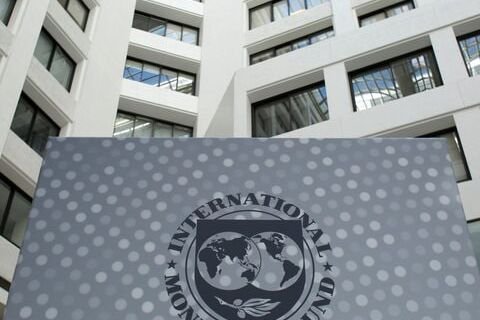
The International Monetary Fund (IMF) has warned in its latest report that the current resilience of the global economy does not signal an end to underlying risks. Despite maintaining stability amid ongoing geopolitical shocks, the cost of sustaining growth is rising. The IMF emphasized that the capacity for nations to respond to future disruptions is being eroded by the accumulation of public debt, surging borrowing costs, and persistent inflationary pressures that are straining national budgets.
IMF projections reveal a growing divergence in the trajectories of international economies. While some nations are benefiting from an investment boom fueled by artificial intelligence and improved terms of trade, other economies are struggling with high import costs, weak demand, and limited fiscal space. This disparity widens the gap between economies capable of absorbing shocks and those that remain vulnerable to immediate negative repercussions.
Regarding the outlook, the October report links growth projections to the trajectory of the war in the Middle East and its potential impact on energy markets and prices. The Fund stressed that current economic activity is insufficient to guarantee long-term stability unless governments succeed in mitigating risks and rebuilding fiscal buffers. These buffers are essential for enabling countries to handle future crises without depleting core resources or deepening financial imbalances.
The IMF forecasts global economic growth at 3.1 percent in 2026 and 3.4 percent in 2027. Meanwhile, inflation is projected to reach 4.7 percent this year before cooling slightly to 4.1 percent next year. These estimates remain contingent on the absence of renewed military escalation and the stabilization of energy markets.
The gap in economic resilience is clearly reflected in regional growth projections. The U.S. economy is expected to maintain 2.3 percent growth, while India continues to post strong results at 7 percent, supported by robust domestic demand. In contrast, growth expectations for some nations have been downgraded, with the IMF projecting a 3.3 percent contraction for the Saudi economy in 2026.
On the issue of the cost of living, the IMF noted that rising prices for food, energy, and essential services are increasing financial burdens on households, thereby exacerbating poverty and inequality. The Fund recommended that financial transfers aimed at vulnerable populations be made more efficient and cost-effective, noting that broad price-capping measures are often expensive and fail to reach those most in need.
Regarding financial stability, the report warned of cumulative risks hidden behind the facade of market resilience. Specifically, it highlighted three primary threats: the possibility of a correction in AI-related asset prices, a sharp rise in sovereign bond yields, and an increase in cyber threats. The IMF called for enhanced financial transparency and a reduction in excessive leverage, urging greater international cooperation to address imbalances before they escalate. It concluded that the true challenge lies in balancing support for economic activity with the need to ensure fiscal sustainability in an increasingly complex world.
Source: Syria Focus Arabic
