Idlib: Al-Fath Mosque Reopening Reaches Milestone of 500 Restored Sites
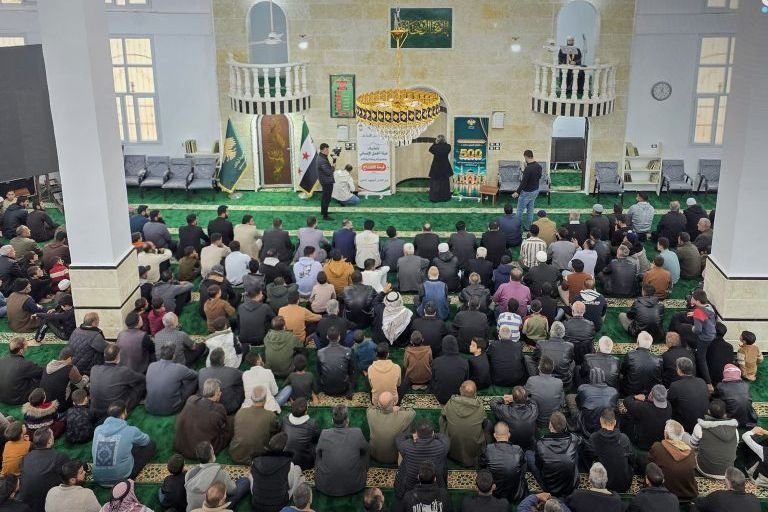
The town of Kafrouma in the southern countryside of Idlib officially reopened the Al-Fath Mosque this Friday following the completion of comprehensive rehabilitation and restoration work. This event marks a significant milestone in a broad regional campaign to rebuild mosques that were damaged or rendered inoperable during years of conflict, bringing the total number of restored religious, community, and educational centers to 500.
Abdul Hamid Al-Khalaf, Director of Endowments in Idlib, stated that the mosques selected for restoration had been completely out of service due to extensive damage sustained in previous periods. He noted that some of these sites had previously been subjected to violations or repurposed for other uses. With these restoration efforts now complete, the buildings have returned to their original roles, opening their doors to worshippers for religious services, Quranic education, and scholarly discussions that serve the local community.
Al-Khalaf provided data from an engineering survey conducted by the Ministry of Endowments in cooperation with the Idlib governorate, which revealed that more than 860 mosques in the province suffered damage. Among these, 100 were completely destroyed. The Director of Endowments emphasized that work continues on the remaining damaged sites, with efforts currently underway to rehabilitate 300 additional mosques. This ongoing work includes the reconstruction of 75 completely destroyed mosques and the repair of 219 sites suffering from partial damage. Restoration operations are currently being carried out in parallel across 67 of these facilities.
Fuad Al-Shaabani, Director of the Humanitarian Work Authority, noted that the restoration of Al-Fath Mosque was the result of several months of continuous effort. He reaffirmed the commitment of local authorities to continue field operations to reconstruct all damaged mosques in the province, highlighting the vital social, educational, and spiritual role these centers play within the Syrian social fabric.
This initiative is part of broader efforts by state institutions and humanitarian organizations in Idlib to rehabilitate essential service and religious infrastructure. The program aims to restore normalcy to areas that experienced significant destruction during the conflict and to ensure that necessary facilities are available to the local population.
Source: Syria Focus Arabic
