Homs Teachers Participate in Training to Enhance Science Education
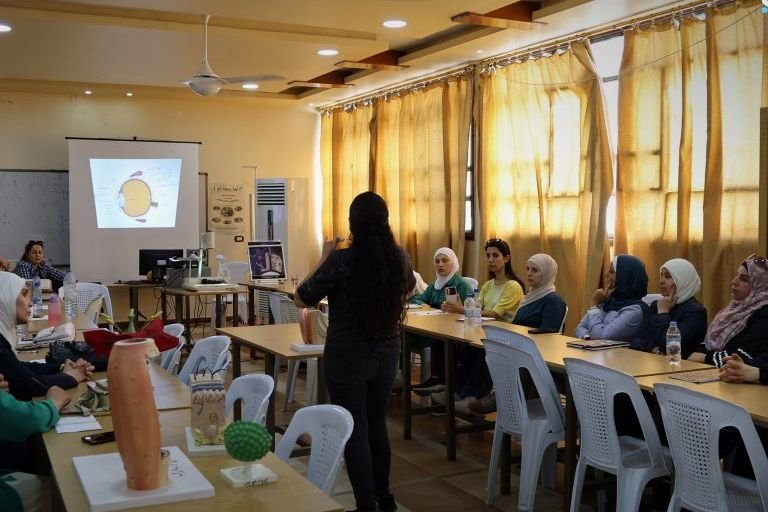
The Department of Education in Homs has launched a new training program aimed at enhancing the quality of science instruction through the use of modern educational tools and techniques. The initiative, currently taking place at the Department of Technologies, involves approximately 22 teachers and assistant teachers specializing in middle school and secondary education.
The training program is designed to move pedagogical practices beyond traditional rote learning. According to Abdel Aziz Taibani, head of the Education Technologies Division, the primary objective is to cultivate a culture of utilizing modern educational resources that simplify complex and abstract scientific concepts. By integrating these tools into the classroom, the ministry intends to transform scientific theory into clear, relatable, and accessible information for students.
Taibani noted that the effective application of these resources is critical for improving the flow of lessons and boosting student engagement and participation. This approach aligns with the Ministry of Education’s updated curricula and modern teaching methodologies. The intensive five-day course represents part of a broader ministerial strategy to upgrade the skills of educational personnel and elevate performance standards across the governorate.
Trainer Raida Yazji emphasized the practical nature of the program, which focuses on familiarizing instructors with a diverse array of teaching aids, including scale models, instructional charts, and laboratory experiments. These visual and application-based tools are intended to facilitate student comprehension and ensure that knowledge is more effectively retained.
Yazji explained that by diversifying the tools available to them, teachers can transition away from traditional lecture-based methods toward a more interactive and collaborative environment. This shift is expected to encourage students to engage in critical observation and deduction, ultimately rendering the study of science more dynamic and effective. Such improvements in teaching strategies are anticipated to have a positive impact on student learning outcomes.
Participants in the course have expressed appreciation for the training, highlighting its utility in connecting them with modern laboratory equipment and demonstrating how to best implement these tools within the classroom setting. Yara Al-Mohsen, one of the participating teachers, remarked that the training provided new ideas and applications that significantly enhance classroom interaction. She emphasized that continued professional development of this nature is essential for keeping pace with the requirements of the updated national curriculum.
The initiative falls under the wider ongoing efforts of the Syrian Ministry of Education to qualify and develop educational cadres. Through such programs, the Ministry aims to ensure that teachers are well-equipped to navigate modern instructional techniques, thereby improving the quality of education and strengthening the overall academic environment in Homs.
