
Hanna Diyab: The Aleppine Storyteller Who Gave the World Aladdin
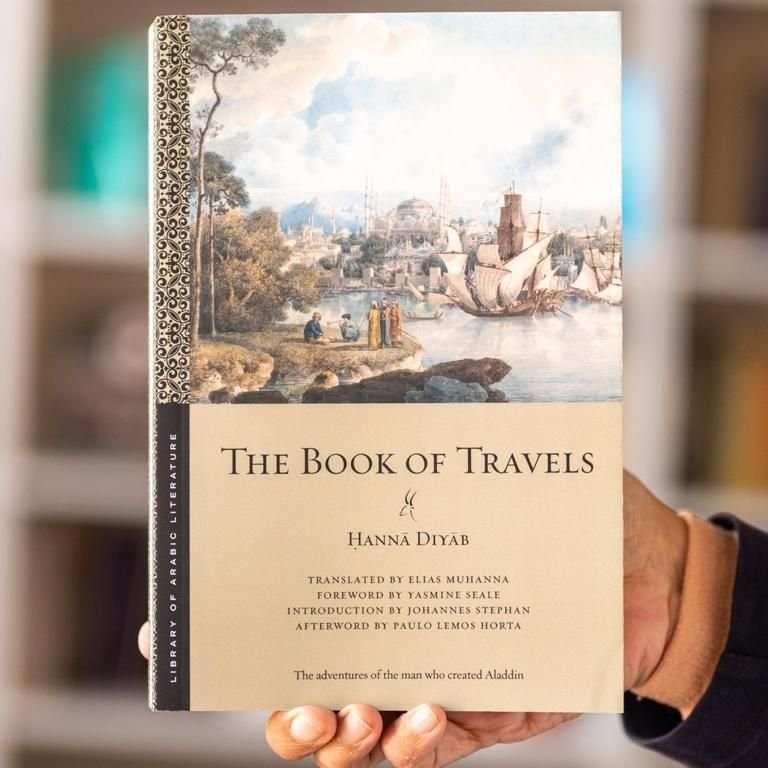
A new book by British researcher Matthew Tiller, titled “Finding Aladdin: The Hidden Story of a Syrian Storyteller,” sheds light on the essential role played by Hanna Diyab, a storyteller from Aleppo, in introducing one of the world’s most famous literary works, “Aladdin and the Magic Lamp,” to Western readers.
Recently published by Biblioasis in North America and Profile Books in the United Kingdom, the study explores the life of Diyab, who was born in Aleppo in 1688 and died there in 1766. The research draws upon historical documents and recent findings, most notably Diyab’s own diary, which was discovered in the Vatican Library, as well as the journals of French orientalist Antoine Galland.
Historical records indicate that the pivotal encounter between Diyab and Galland took place in Paris in 1709. The Aleppine storyteller had arrived in the city accompanied by the French traveler Paul Lucas, for whom Diyab had worked as a translator and companion. At that time, Galland was actively translating the “One Thousand and One Nights” into French. On May 5, 1709, Galland noted in his diary that “Hanna, the Maronite from Aleppo,” had successfully recounted the tale of the magic lamp.
Diyab’s contributions were not limited to the story of Aladdin. Researchers have pointed out that his oral narratives served as the source for several other famous tales included in Galland’s translation, such as “Ali Baba and the Forty Thieves” and “Prince Ahmed and the Fairy Pari Banu.” Despite this, the name of the Aleppine storyteller remained absent from the French edition that gained widespread popularity across Europe, and he has not received the historical recognition that reflects his significant contribution to the collective literary memory.
The new book, spanning between 250 and 300 pages depending on the edition, provides an in-depth reading of the young Aleppine’s journey through Mediterranean cities, his cultural experiences in Paris, and his eventual return to Aleppo, where he settled to work in the textile trade. The significance of this biography lies in its ability to open a window into the movement of stories between East and West, documenting Aleppo’s historical status as a center of cultural and storytelling excellence.
This publication is seen as a step toward rectifying the historical record, reconnecting global folktales with their Syrian roots, and highlighting the previously overlooked role that Syrian creative figures played in shaping world literature and guiding its trajectory during the early 18th century.
Source: Syria Focus Arabic
