Damascus Seminar Examines Economic and Cultural Future of Syrian Drama
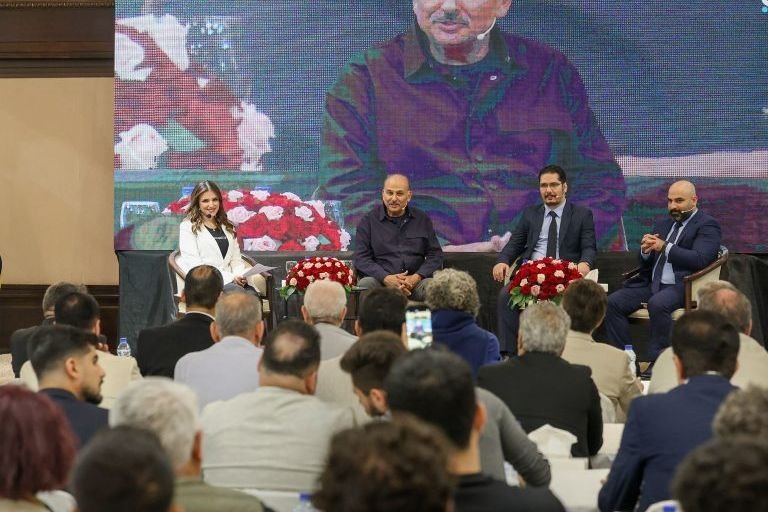
The Syrian capital, Damascus, recently hosted a specialized seminar titled “Syrian Drama: Between Influence and Entertainment.” The event, held at the Seven Gates Hotel, was organized by the National Drama Committee in collaboration with the Cinema and Television Industry Committee. The discussion focused on strategies to enhance the role of Syrian drama in addressing societal issues, preserving national identity, and developing the sector as a vital investment field capable of supporting the national economy and generating new employment opportunities.
Dr. Suleiman Muhanna, Director of the Media and Communications Directorate, spoke on behalf of the National Drama Committee. He emphasized that drama serves a fundamental purpose beyond simple entertainment, acting as a key instrument for social awareness. Dr. Muhanna highlighted the responsibility held by artists and producers to exchange technical expertise in a way that benefits Syrian society and elevates local artistic standards. He noted that such gatherings provide an essential platform for stakeholders to engage in dialogue and formulate practical ideas to boost investment in the arts.
Actor Jamal Suleiman, who participated in the seminar, discussed the dual potential of drama to influence audiences while providing entertainment. He argued that human values and intellectual messages resonate more deeply when presented through creative artistic forms, rather than through overt preaching or direct messaging. Suleiman cited examples from Arabic cultural and literary heritage to illustrate the power of art in conveying meaningful messages.
Nidal Habbal, Secretary of the National Drama Committee, identified drama as a significant tool of soft power and a cultural ambassador for communities. He underscored the importance of ensuring that dramatic works remain connected to the reality and aspirations of the public. Furthermore, he advocated for highlighting Syria’s diverse cultural and civilizational history while avoiding negative stereotyping in storytelling.
From an economic perspective, Ali Onaiz, head of the Cinema and Television Industry Committee, addressed the strategic role of drama production as a sector capable of contributing to the domestic product. Onaiz pointed out that an increase in production companies operating within Syria would stimulate associated service and tourism sectors, thereby creating a positive economic impact and fostering growth opportunities.
Participants concluded that the advancement of Syrian drama requires a cohesive integration between cultural, creative, and production entities. Key recommendations included improving script quality, elevating the standard of artistic work, and fostering a supportive environment for creators to help the industry regain its prominent position. This seminar is part of a series of meetings aimed at renewing the artistic and national discourse surrounding the medium, following the “Drama and Society: Between Freedom and Responsibility” workshop held last July.
Source: Syria Focus Arabic
