Damascus Hosts Calligraphy Symposium Showcasing Traditional Techniques
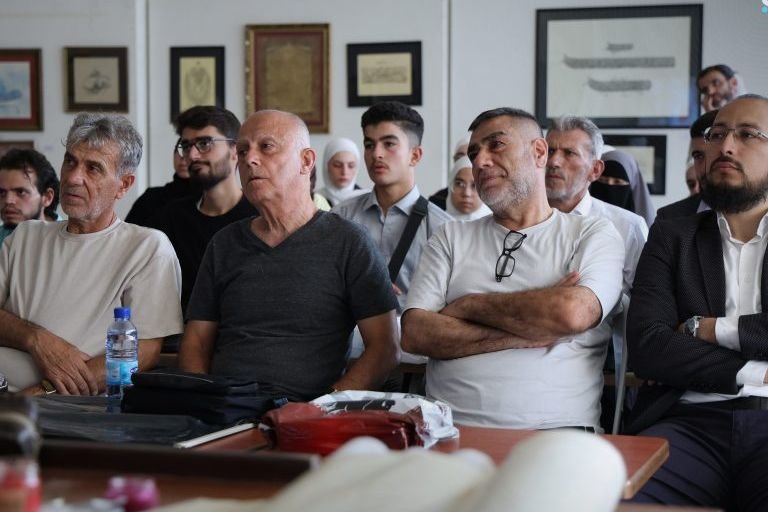
The National Center for Visual Arts in Damascus hosted a series of specialized workshops on Thursday as part of the Syrian Forum for Arabic Calligraphy and Decoration. The event, which brought together calligraphers and visual arts enthusiasts, served as a platform to highlight the evolution of the Arabic script from a traditional writing system into a sophisticated art form that emphasizes visual composition and the inherent rhythm of language.
Three distinct workshops were held during the event, each focusing on specific aspects of the calligraphic craft. The first workshop, led by calligrapher Salah Al-Khadr, explored the intricate process of creating a calligraphic panel. Al-Khadr detailed the foundational stages of the work, beginning with the critical choice of text and the appropriate script style. He explained the technical complexities involved in studying letter forms and their spatial relationships, as well as the meticulous labor required to build a balanced composition and execute a final, polished template. In further remarks, Al-Khadr noted that the selection of text serves as the primary building block of a piece, requiring the artist to balance letters within the panel’s constraints before moving into experimental phases to determine the most harmonious shapes.
The second workshop was led by calligrapher Mahmoud Abdullatif Dousho, who focused on the principles and characteristics of the Rقعة (Ruq’ah) script. Dousho emphasized the importance of this script as a foundational element of daily writing and advocated for its increased presence in school curricula, arguing that mastering this style is essential for improving overall student writing standards. He reiterated that the script serves as a fundamental base for learning other forms of Arabic calligraphy.
The final session was dedicated to the Diwani Jali script, conducted by calligrapher Hussein Shaqoula. This workshop examined the unique aesthetics of the style, focusing on its complex rules and distinctive artistic formations. The presentation attracted significant attention from attendees, including both professional calligraphers and those interested in the broader field of visual arts.
Beyond the formal presentations, the event facilitated extensive discussions between the participating experts and the public. These sessions covered both the theoretical frameworks and the practical applications of calligraphy, with participants demonstrating techniques in real-time to the audience. This interaction fostered a deeper understanding of the precision required for the craft, which presenters noted relies heavily on sustained experience, practice, and patience to achieve a refined final form. The symposium is part of a series of initiatives supported by the Ministry of Culture aimed at preserving and promoting traditional Arabic arts within the national cultural and artistic landscape.
