Damascus Exhibition Celebrates the Art of Arabic Calligraphy
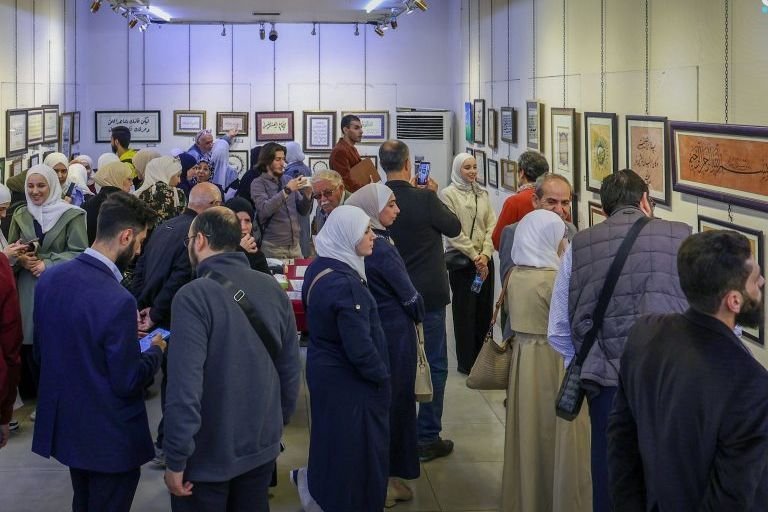
The Arab Cultural Center in the Abu Rummaneh district of Damascus recently hosted an art exhibition dedicated to the refined craft of Arabic calligraphy. The event gathered a diverse collection of works from professional calligraphers, alongside notable contributions from students, enthusiasts, and fine artists.
The exhibition is part of an ongoing effort to highlight the aesthetics of the Arabic script and reaffirm the vital role played by the Levantine school in preserving this artistic and cultural heritage, which remains deeply rooted in Arab and Islamic traditions.
Calligrapher Adnan Al-Sheikh Othman noted that the exhibition serves as a significant venue for direct interaction between different generations of artists. He emphasized that the event allows students and amateurs to showcase their work while benefiting from the experience of participating masters. According to Al-Sheikh Othman, this exhibition serves as the launch of a series of future initiatives aimed at promoting the art of calligraphy and strengthening its presence in the cultural landscape. He further underscored the prestigious status held by the Levantine school within the Arab and Islamic worlds, attributed to its long history and unique aesthetic legacy.
Fine artist Bashir Bashir shared his experience, presenting six works based on classical calligraphic styles, including Naskh, Thuluth, Diwani, and Kufic scripts. Bashir explained that his participation reflects a commitment to returning to the rigorous traditional foundations of Arabic calligraphy, despite his varied career, which includes contemporary experiments in the field of Hurufiyya (letterism). He stated that these pieces demonstrate the ability of Arabic script to harmonize strict classical rules with modern artistic vision.
In a similar context, calligrapher Maria Tasabji highlighted the spiritual and cultural dimensions of the art form, describing it as a process of spiritual connection between the artist and their tools. She commended the efforts of the Directorate of Culture, which uses its centers across Syrian governorates to provide permanent platforms for artists to display their work and engage directly with the public.
The organization of this exhibition is part of a broader strategy to preserve Arabic calligraphy as a core component of Syria’s cultural identity and civilizational heritage. It is also designed to foster cooperation between cultural institutions and professionals in the field, ensuring the continuity and development of this art form for future generations.
Source: Syria Focus Arabic
