
Damascus Court Holds Ninth Session in Trial of Atef Najib
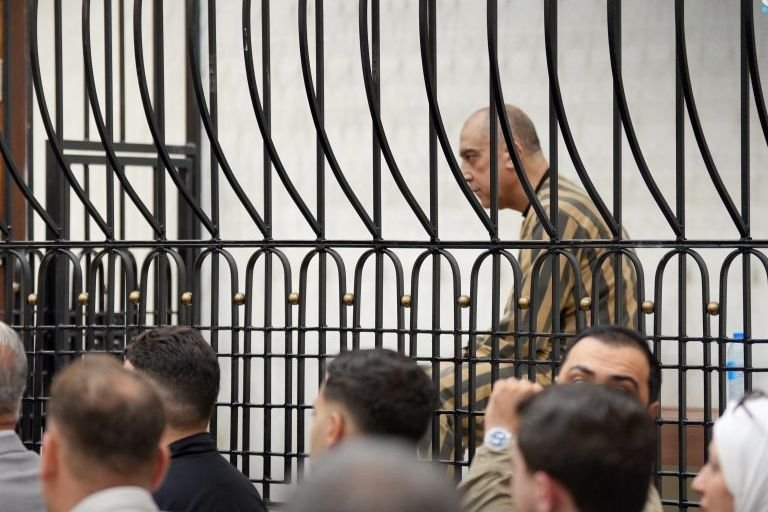
The Fourth Criminal Court at the Palace of Justice in Damascus held its ninth session today, Tuesday, as the judicial process continues regarding the case filed against Atef Najib and several other fugitives accused of committing crimes against the Syrian people. The session was presided over by Judge Fakhr al-Din al-Aryan, in the presence of the Public Prosecutor, Counselor Hassan al-Turba, and the head of the National Commission for Transitional Justice, Abd al-Basit Abd al-Latif, alongside various members of the commission. The proceedings were also attended by representatives of international legal and human rights organizations, as well as family members of the victims seeking justice.
This latest session follows the eighth hearing held on August 4, during which the court heard the closing arguments from both the public prosecution and the defense counsel, and received final statements from the accused. During the proceedings, the representative of the Public Prosecution requested the court to formally convict Atef Najib and the other defendants, who remain at large, on multiple grave charges. The prosecution detailed allegations of murder, torture, arbitrary detention, and the embezzlement of public funds, formally requesting that the court impose the maximum legal penalty of death. Prosecutors asserted that the evidence gathered in the case file is comprehensive, coherent, and mutually reinforcing.
Atef Najib, a former head of the Political Security branch in the Daraa Governorate, is a central figure in this legal action. He is accused of bearing direct responsibility for the repressive campaigns and mass arrests that swept through Daraa following the onset of the 2011 uprising. Among the specific allegations facing Najib is his involvement in the arrest of children in Daraa in March 2011, an event widely regarded as a significant turning point in the early stages of the unrest. Furthermore, the charges against him include direct responsibility for the Omari Mosque massacre, participation in the violent suppression of peaceful protests, and systematic mass murder and torture that resulted in deaths within detention facilities.
The ongoing legal proceedings, which first commenced on April 26, represent a structured effort within the judicial system to address the grievances of the victims, document historical facts, and ensure that those accused of serious criminal violations are held accountable under the law. As the court works toward a final verdict, the case remains a significant development in the broader context of legal efforts to address past events in Syria. The court session underscores the commitment to formal judicial procedures to examine evidence related to the security and humanitarian crises that have impacted the country.
