
Aleppo Officials Discuss Recovery Projects and Reconstruction with UN
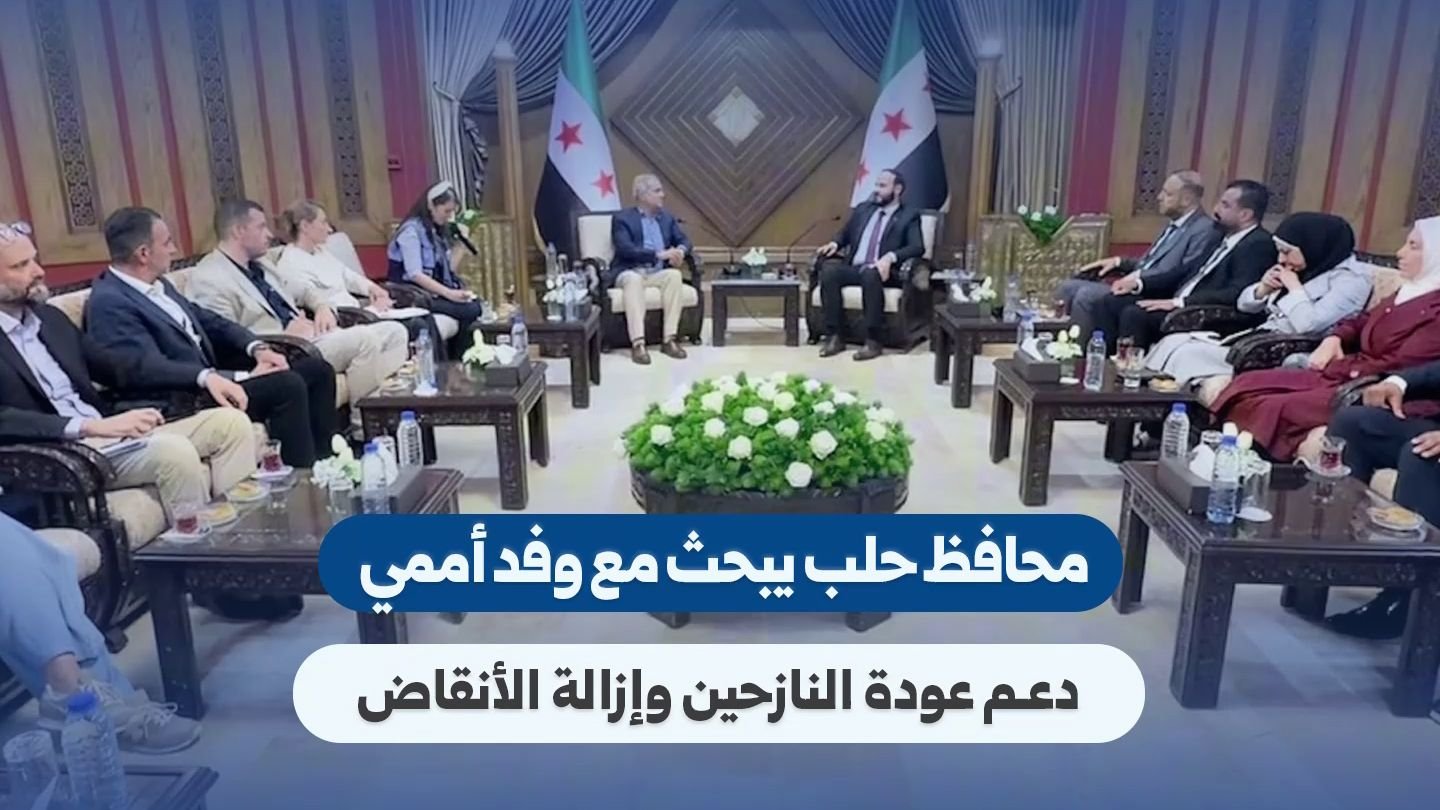
Aleppo Governor Azzam Al-Ghareeb met on Tuesday with a United Nations delegation headed by the Assistant Secretary-General and Deputy Regional Humanitarian Coordinator for the Syria Crisis, Indrika Ratwatte, to discuss advancing humanitarian and development cooperation in the province. The discussions focused on strategies to facilitate the voluntary return of displaced persons, specifically through the ‘Zero Tent’ initiative, as well as the critical management and recycling of post-conflict debris.
The meeting, which was also attended by Qutaiba Qadish, Director of the International Cooperation Department at the Ministry of Foreign Affairs and Expatriates, included a field visit to a debris recycling facility in the Ramouseh district. This facility, which operates under the supervision of the United Nations Development Programme (UNDP) with funding from the South Korean government, serves as a cornerstone for local recovery efforts.
During the site visit, the delegation received a detailed briefing on the technical operations of the plant. The facility processes rubble into usable construction materials, such as bricks, interlocking paving stones, and sidewalk tiles. Officials noted that these materials are instrumental in the rehabilitation of local infrastructure and support the broader goals of early recovery for the city. By repurposing building debris, which had previously posed a significant burden on the local community and municipal services, the project is helping to revitalize affected residential areas and essential public works.
Qadish emphasized the strategic importance of the initiative, noting that the project represents an investment of approximately two million dollars. He stated that such endeavors are essential for provinces like Aleppo that experienced extensive structural damage during the war. He highlighted the government’s commitment to expanding these projects as a national priority to support the ongoing reconstruction of damaged cities and villages. The focus remains on utilizing sustainable methods to restore essential services and improve the quality of life for returning residents.
Following the field visit, the UN delegation met with members of the Aleppo Provincial Executive Office and representatives of relevant local directorates. The discussions expanded to cover urgent humanitarian and service-oriented needs across several sectors, including healthcare, water, and education. A primary theme of the talks was the transition from emergency humanitarian response to sustainable service delivery. These efforts are part of a wider framework of cooperation with international organizations aimed at improving the living conditions in Aleppo, enhancing the service environment, and accelerating the return of displaced families to their homes.
