Al-Qurtubi’s Exegesis: A Key Reference in Syrian Academic Studies
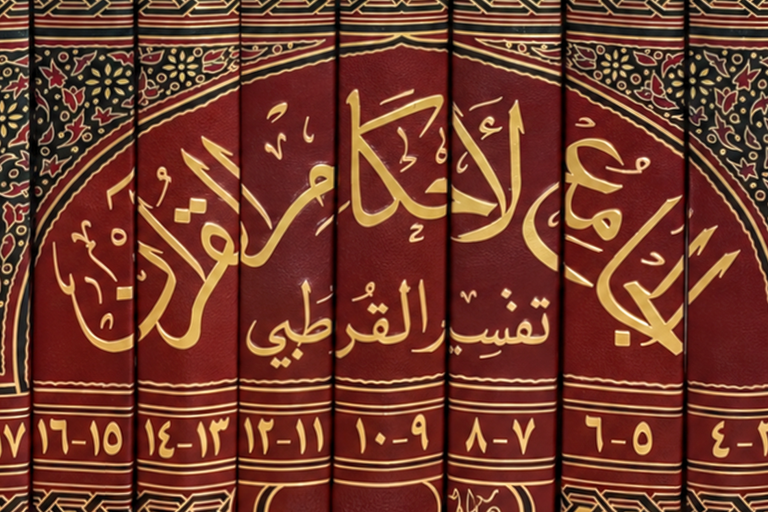
The masterpiece “Al-Jami’ li-Ahkam al-Qur’an” (The Compendium of Quranic Rulings) by Imam Abu Abdullah Muhammad ibn Ahmad al-Qurtubi continues to hold a prestigious position in Islamic libraries and Syrian universities. More than seven centuries after the author’s passing, the work remains an essential pillar for researchers specializing in Quranic exegesis (Tafsir), jurisprudence, Arabic linguistics, and Quranic recitation styles.
The work’s significance stems from the encyclopedic methodology developed by Imam al-Qurtubi. Originally from Cordoba, he embarked on an extensive scholarly journey that concluded with him settling in Upper Egypt, where he remained until his death in 671 AH (1273 AD). In crafting this book, al-Qurtubi aimed to create a “reminder for himself and a provision for his final resting place.” He specifically prioritized the legal rulings of the Quran, consciously omitting long historical narratives or anecdotal tales from previous commentators that did not serve the purpose of deriving religious law.
From a scholarly perspective, the book is distinguished by its ability to bridge the Quranic text with the practicalities of life. Al-Qurtubi organized the discussion of verses into specific topics, covering reasons for revelation, variant recitations, the study of abrogation (nasikh and mansukh), linguistic analysis, Hadith authentication, and the diverse perspectives of jurists and scholars. His integration of classical Arabic poetry to clarify linguistic meanings has provided added value to researchers in the field of Arabic language and linguistics.
This exegesis has exerted a profound influence on university-level studies in Syria, serving as a rich source for academic inquiry. A notable example is the research conducted at the University of Damascus by scholar Sukaina Mahmoud Mawed, who focused on the linguistic phenomena within al-Qurtubi’s commentary. Her study highlighted the depth of the scholarly material contained in the text, particularly regarding the analysis of terminology and its semantic implications.
Dr. Mohammed Kalo, a professor of Quranic exegesis and sciences, emphasized the comprehensive nature of the work. He praised the author’s rigorous commitment to attributing opinions to their originators and Hadiths to their respective compilers, which has solidified the book’s status as a trusted resource for students and researchers in comparative jurisprudence.
Throughout the centuries, various editions of the work have circulated among readers and students across Syria and the Arab world. These range from the early editions published by the Egyptian National Library starting in 1935 to modern, peer-reviewed critical editions overseen by contemporary experts. This enduring legacy of study and acquisition confirms that al-Qurtubi’s exegesis has successfully transcended its own era. It remains a living reference that continues to fulfill the author’s hope for a lasting scholarly contribution, serving as a central focus for academic discourse on interpreting the Quran and deriving its rulings.
