
Temperatures Rise Across Syria as Summer Heat Continues
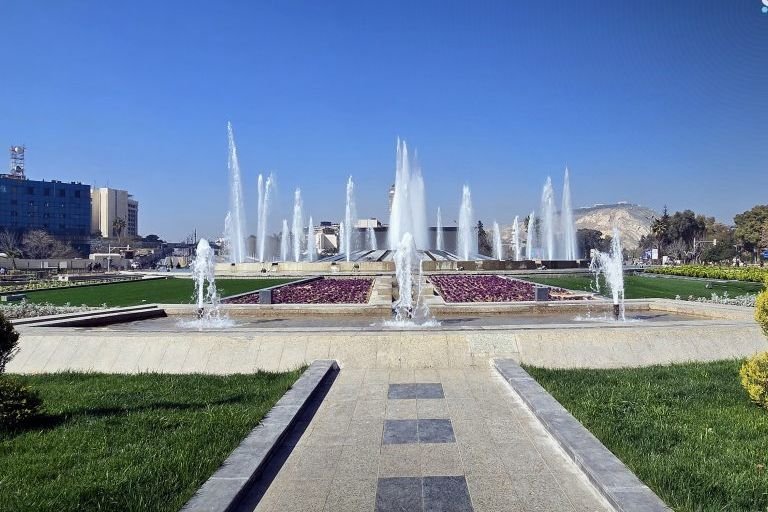
Temperatures across Syria are continuing to climb, with many regions now seeing conditions that exceed seasonal averages. According to the National Center for Meteorology, the mercury is rising across most of the country, with northern regions and the Al-Jazeera area experiencing temperatures around or slightly above normal, while other parts of the country face temperatures 2 to 4 degrees Celsius higher than typical for this time of year.
The national weather authority has characterized the current weather pattern as ranging from relatively hot to hot, with skies generally clear or partially cloudy. Atmospheric conditions are expected to remain dusty in eastern areas, the Al-Jazeera region, and the Badia desert. Despite the daytime heat, nights are expected to remain mild, particularly in mountainous regions, offering some relief from the higher temperatures recorded during the peak afternoon hours.
Morning conditions are marked by high humidity across the western, central, and southern regions of the country. Authorities have issued advisories regarding the potential for light fog formation in parts of the central, coastal, and southern regions during the early morning hours, urging drivers and residents in these areas to exercise caution.
Prevailing winds are expected to blow from the west to the southwest, ranging from light to moderate speeds. However, the meteorological office has noted that wind gusts may strengthen during the afternoon, with speeds potentially exceeding 45 kilometers per hour, particularly in the central region. Maritime conditions remain calm, with low-wave heights reported along the coast.
Temperature variations across the country remain significant, reflecting the diverse geography of Syria. In Damascus, highs are expected to reach 38 degrees Celsius, with lows of 22 degrees. Hama and Aleppo are also seeing elevated temperatures, with highs reaching 39 and 38 degrees Celsius respectively. The eastern provinces continue to endure the highest temperatures; Deir ez-Zor is expected to reach a peak of 43 degrees Celsius, followed by Al-Hasakah at 41 degrees and Raqqa at 40 degrees Celsius. Conversely, coastal areas and regions like Quneitra and the Qalamoun area in Rif Dimashq are experiencing slightly more moderate conditions, with highs ranging between 31 and 34 degrees Celsius.
These temperature fluctuations are part of the seasonal shift currently affecting the Syrian landscape. Residents are advised to stay hydrated and take necessary precautions during the hottest parts of the day, particularly in regions where the heat is most intense.
