Kurdistan Region Tasked with Dismantling Remaining SDF Structures and Removing PKK
Washington — George Haddad | Exclusive to Syria Focus
A well-informed source has told Syria Focus that the U.S. administration has informed the leadership of the Kurdistan Region of Iraq that it must move forward with dismantling what remains of the military and organizational structure of the Syrian Democratic Forces (SDF) and end any arrangements that could allow the group to continue operating as an independent military force outside Syria’s state institutions.
According to the source, the U.S. directive also includes working to transfer elements who refuse to join the new arrangements to the Kurdistan Region of Iraq as part of a transitional mechanism for the next phase. Safe corridors would also be secured for non-Syrian elements, or individuals originally from areas around the Qandil Mountains and linked to the Kurdistan Workers’ Party (PKK), allowing them to return to their original bases and areas of presence.
The source said the U.S. message to the Kurdistan Region’s leadership is no longer limited to mediating between Damascus and the SDF. Rather, it now concerns a direct role for the Kurdistan Region in ending the SDF’s independent military structure, while preserving its role as a cultural and spiritual reference point for Syrian Kurds — but without a U.S. commitment to provide them with political or military cover.
A “Very Clear” U.S. Message to Mazloum Abdi
According to the source who spoke to Syria Focus, U.S. officials have rejected several requests from the SDF leadership in recent months for additional meetings, signaling a change in the nature of the relationship between Washington and the organization’s leadership.
The source added that the latest meeting between Mazloum Abdi and the U.S. Special Envoy for Syria and Iraq, Tom Barrack, held under the auspices of the Kurdistan Region’s leadership, was not considered constructive from the U.S. perspective.
Information obtained by Syria Focus indicates that Abdi received a direct message during the meeting that the period of maneuvering in negotiations with Damascus had ended. The SDF was no longer being asked to open new negotiating tracks, but rather to implement the agreements reached with the Syrian government without objection or delay.
According to the source, Abdi understood the envoy’s tone as closer to a warning — or even a threat — than to conventional diplomatic language.
However, according to the account conveyed by the source, Barrack made clear to the Kurdistan Region’s leadership that he did not have sufficient time to deliver a message that would “satisfy everyone,” and that the current phase required a high degree of clarity to prevent Washington from facing yet another attempt by the SDF to maneuver in Damascus under the pretext of continued U.S. protection.
“No U.S. Cover” if Implementation Fails
The source said the U.S. message, as conveyed to its contacts, was sufficiently clear to inform the SDF leadership that the administration would not provide security support or renewed mediation if the group failed to implement its understandings with Damascus.
More significantly, according to the source, Washington informed the SDF leadership that any use of force by the Syrian state resulting from the failure of the agreement or refusal to implement it would not be viewed by the United States as a confrontation requiring U.S. intervention, but rather as an internal Syrian matter.
If confirmed, this would represent an important shift in the nature of the U.S. role in the Syrian Kurdish issue. Under this account, Washington would be moving from the position of political and security guarantor to that of an actor pushing toward the termination of independent military arrangements and their reintegration into Syrian state institutions.
From the March 10, 2025 Agreement to the End of the Military Phase
The significance of this information becomes clearer when viewed against the backdrop of a series of agreements that began more than a year ago.
On March 10, 2025, Syrian President Ahmed al-Sharaa and Mazloum Abdi signed an agreement explicitly providing for the integration of civilian and military institutions in northeastern Syria into the institutions of the Syrian state, including border crossings, airports, and oil and gas fields, while guaranteeing the rights of Syrians, including those of the Kurdish community. The agreement also stipulated that executive committees would complete the process before the end of 2025.
Implementation, however, stalled, with the central dispute focusing on the nature of military integration: would SDF personnel join state institutions individually and operate under centralized command, or would the group retain a collective military structure and independent leadership?
Analyses at the time indicated that Damascus had demanded since early 2025 that the SDF’s military structure be dismantled and its members individually incorporated into the Ministry of Defense, while Mazloum Abdi initially rejected that approach.
January 2026: Washington Moves from Mediation to Pressure for Implementation
In January 2026, the issue entered a more sensitive phase following clashes between government forces and the SDF.
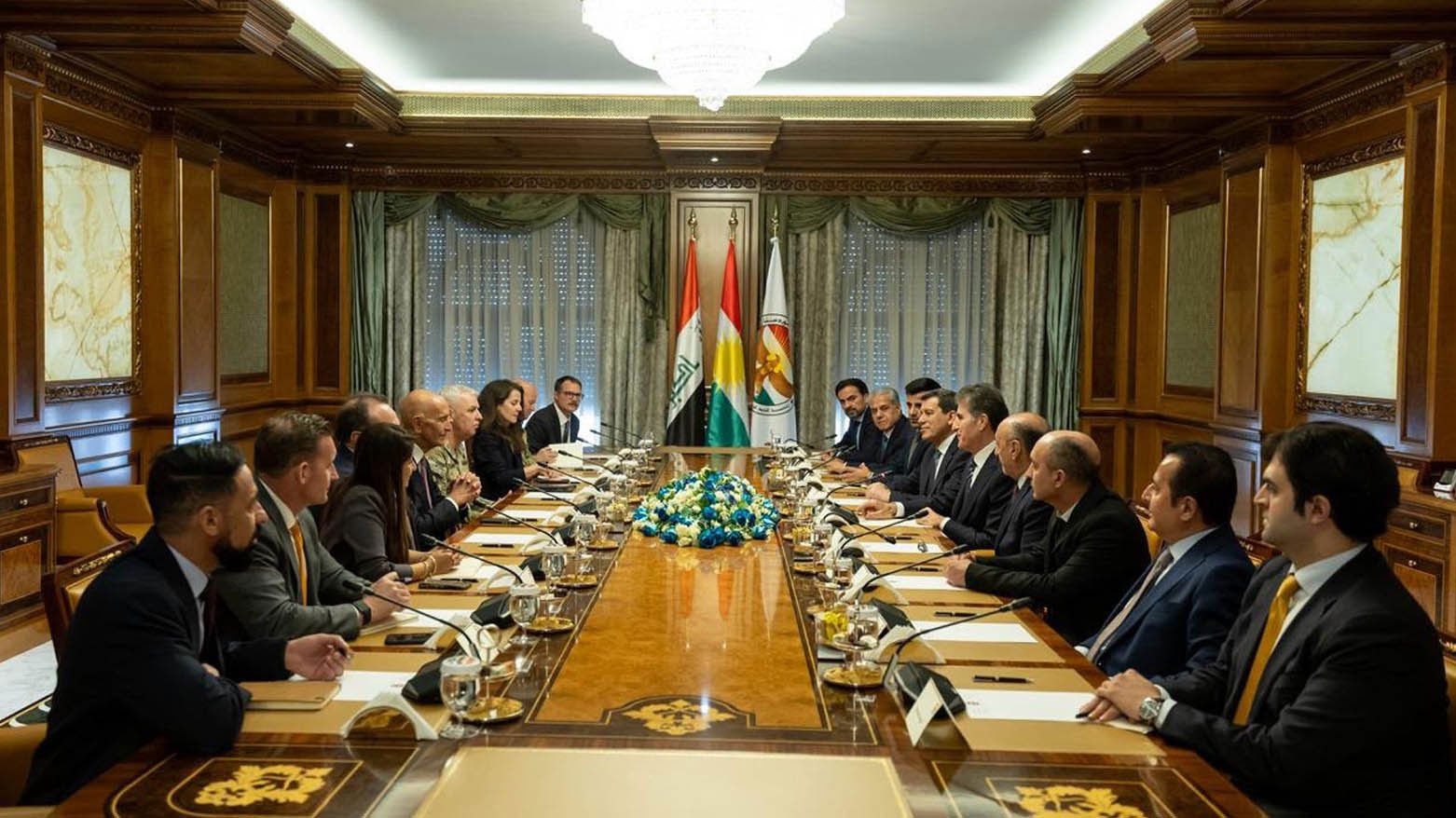
On January 17, 2026, high-level meetings were held in Erbil involving Tom Barrack, Mazloum Abdi and Kurdish leaders, as part of an effort to contain the escalation and salvage the implementation track. Barrack also met that day with Kurdistan Region President Nechirvan Barzani, with Washington and Erbil publicly emphasizing the importance of dialogue and peaceful solutions.
On the same day, Masoud Barzani hosted a meeting bringing together Barrack, Abdi and Syrian Kurdish leaders. Discussions focused on ending the escalation and advancing the political process.
New agreements followed in late January, establishing a more detailed framework for integration. The agreement provided for the integration of military, security and administrative institutions; the transfer of state institutions, border crossings and oil and gas fields; and the incorporation of SDF personnel into the Ministries of Defense and Interior following security vetting.
It also explicitly called for the departure from Syrian territory of non-Syrian leaders and personnel linked to the Kurdistan Workers’ Party (PKK).
That final point notably intersects with the new information obtained by Syria Focus concerning non-Syrian personnel and individuals originating from the Qandil Mountains and linked to the PKK, although the details concerning corridors and the mechanism for their transfer have not been officially disclosed in the open sources reviewed by Syria Focus.
June: Barrack and Abdi Meet Again in Erbil
On June 16, 2026, Kurdistan Region President Nechirvan Barzani hosted a meeting in Erbil with Tom Barrack and Mazloum Abdi.
According to the official presidency of the Kurdistan Region, the meeting addressed the political and security situation in Syria, cooperation between the Kurds and Damascus, and ways of addressing outstanding challenges. Barzani also emphasized dialogue, understanding and the protection of the rights of Kurds and other Syrian communities.
Reports at the time indicated that the talks focused specifically on implementing the January agreement and integrating SDF forces and the institutions of the Autonomous Administration into Syrian state institutions.
The source’s account to Syria Focus, therefore, that Erbil has become a key channel for exerting pressure on the SDF does not emerge in isolation. Over recent months, Erbil has become one of the most important arenas for U.S.-Kurdish-Syrian contacts concerning the future of the SDF.
August: Barzani in Damascus
The most significant development came on August 3, 2026, when Nechirvan Barzani visited Damascus and met President Ahmed al-Sharaa at the People’s Palace. It was the first visit of its kind by the president of the Kurdistan Region of Iraq to Syria since the fall of Bashar al-Assad’s regime.
The Syrian presidency said the meeting addressed relations between Damascus and Erbil, strengthening cooperation and coordination — particularly in the economic sphere — as well as regional developments and issues of mutual interest.
Yet the timing of the visit carried greater political significance than the official statements alone suggested. It came as the SDF integration file was approaching a decisive stage. Press reports at the time indicated that the SDF issue and the integration of its forces and institutions were part of the broader context of the visit, while sources spoke of a prominent role for the Kurdistan Region in advancing a settlement between Damascus and Syria’s Kurdish forces.
Following the visit, Barzani also expressed confidence in Syria’s ability under President Ahmed al-Sharaa to move toward stability and prosperity — a position carrying political significance given the sensitivity of relations between Erbil and the SDF.
Abdi Announces: “The Integration Phase Is Over”
In a development of particular importance, Mazloum Abdi announced on August 21 that the process of integrating Kurdish military, security and administrative institutions into the Syrian state had “been completed and ended,” declaring the beginning of a new phase focused on consolidating Kurdish rights in the Syrian constitution.
According to Abdi’s published statements, integration had taken place under the agreements reached between the two sides during the current year. Reports also indicated that SDF-linked elements who had entered Syria from Iraq, Iran and Turkey had also left the country.
This raises one of the key questions surrounding the information obtained by Syria Focus: does Abdi’s declaration that the civilian and military integration process has ended mark the conclusion of the issue, or will the next phase involve completing the dismantling of the remaining organizational and military structures and relocating personnel who have not actually entered state institutions?
The source’s information points to the latter possibility.
Erbil from “Mediator” to “Kurdish Guarantor” Without a Military Role
According to the source, the latest U.S. communication with the Kurdistan Region’s leadership, which preceded Nechirvan Barzani’s visit to Damascus, carried clear U.S. encouragement for accelerating rapprochement between Erbil and Damascus.
The source said Washington urged the Kurdistan Region to accelerate the dismantling of what remains of the SDF, while encouraging Erbil to assume a role that could be described as a “spiritual guardian” of Syrian Kurds — but without allowing that role to become a military commitment or a political umbrella preserving an independent military entity inside Syria.
This approach would establish a new equation for Erbil’s role in the Syrian file:
Kurdish rights within the Syrian state in exchange for ending the SDF’s independent military structure; a cultural role for the Kurdistan Region in exchange for no cross-border Kurdish security or military umbrella.
What Does This Mean for the Future of the SDF?
The information obtained by Syria Focus suggests that Washington now views the current phase as one of implementation rather than negotiation.
The March 2025 agreement established the principle of integration. The January 2026 agreements provided more detailed mechanisms. The Erbil meetings in January and June reinforced the U.S. and Iraqi Kurdish role in advancing the process, while Barzani’s August visit to Damascus opened a direct channel between Erbil and Damascus.
Then came Abdi’s August 21 announcement that the integration phase had ended.
Against this backdrop, the source’s account to Syria Focus portrays the next stage as one of eliminating the remaining military and organizational structures operating outside state institutions, while handling the issue of non-Syrian personnel separately.
The most sensitive point, however, is the source’s assertion that Washington is no longer prepared to give the SDF room to maneuver under the banner of “U.S. protection,” and that any attempt to reopen negotiations over new conditions may not receive the response in Washington that it once did.
According to the well-informed source, the new U.S. message to the SDF can be summarized in three points:
First: There will be no return to the model of an independent military force.
Second: From Washington’s perspective, implementing the understandings with Damascus is no longer a matter open to negotiation or postponement.
Third: The Kurdistan Region of Iraq is the channel that can help secure a political and safe transition for Syrian Kurds and address the status of non-Syrian personnel, but it will not become a substitute for the Syrian state or a military umbrella for the SDF.
The SDF issue may therefore have entered its final phase — not through a new agreement, but through the completion of existing agreements and the dismantling of what remains of the independent structure that emerged during the years of war.
