
Damascus Court Sentences Waseem Al-Assad to Death for War Crimes
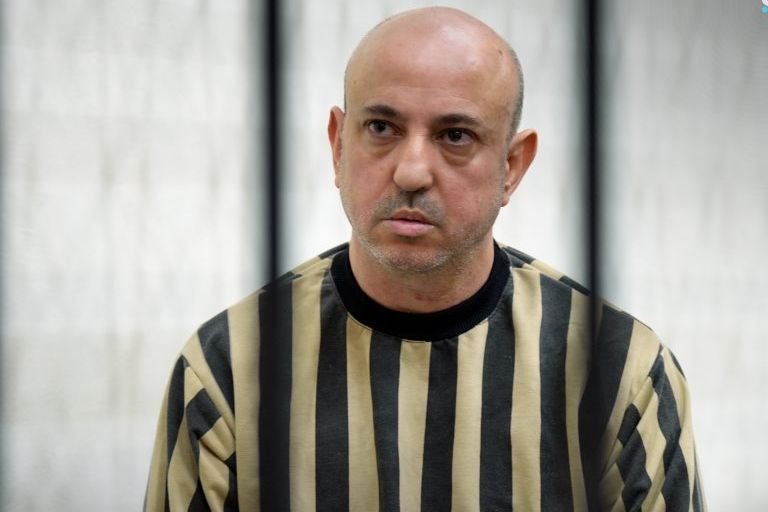
The Fourth Criminal Court in Damascus has handed down a death sentence to Waseem Al-Assad, finding him guilty of committing war crimes and crimes against humanity during the period of the former regime. In addition to the capital sentence, the court ordered the full confiscation of all his movable and immovable assets, which will be transferred to the national treasury after all relevant legal and financial obligations are met.
Presiding Judge Fakhr al-Din al-Arian delivered the verdict during the sixth session of the trial, which was attended by members of the National Transitional Justice Commission as well as representatives from various international legal and humanitarian organizations. The court concluded that the defendant played an active role in a joint criminal enterprise designed to suppress peaceful popular protests that began in 2011.
The court’s investigation established that Waseem Al-Assad, in collaboration with the Fourth Division, formed armed groups that participated in military operations within the Eastern Ghouta region between 2012 and 2014. These operations, according to the court, involved systematic shelling of populated areas, which created the conditions for the subsequent looting and theft of civilian property—an activity widely known as ‘taafeesh.’
A central focus of the trial was the 2013 massacre between Mleiha and Zibdeen. The court found that the defendant’s groups were directly involved in the military actions that led to the deaths of approximately 75 civilians, many of whom were left unidentified due to the severity of the bombardment. The ruling described this as a component of a larger criminal project directed by the former regime to crush opposition through extrajudicial killings, torture, and forced disappearances.
The court also provided detailed testimony regarding the abduction and extrajudicial killing of civilians. Evidence presented included instances where individuals were kidnapped for their political opposition, subjected to severe torture in unofficial detention sites, and subsequently executed without trial. The ruling highlighted the deliberate, ethnically and religiously motivated nature of some of these acts, noting that the defendant’s forces frequently operated outside any established judicial or military framework.
While the prosecution had pursued various charges, the court acquitted Al-Assad of drug trafficking and smuggling charges due to insufficient evidence, though it noted that the public prosecutor remains free to reopen the case if further evidence emerges. Conversely, the court rejected any potential for leniency, citing the gravity of the crimes and the significant number of victims.
This verdict follows a series of recent judicial actions taken by the Fourth Criminal Court, which previously sentenced the former head of the regime, Bashar Al-Assad, and several other high-ranking officials to death in absentia for similar crimes. These proceedings are part of an ongoing national effort to address accountability for human rights violations committed during the years of conflict. The court has also directed that all protective measures for witnesses in the case remain in effect and has referred the case to the National Commission for Missing Persons to assist in the recovery of victims buried in the vicinity of Mleiha.
