
Damascus Water Utility Partners with Czech Firm for Ghizlaniya Project
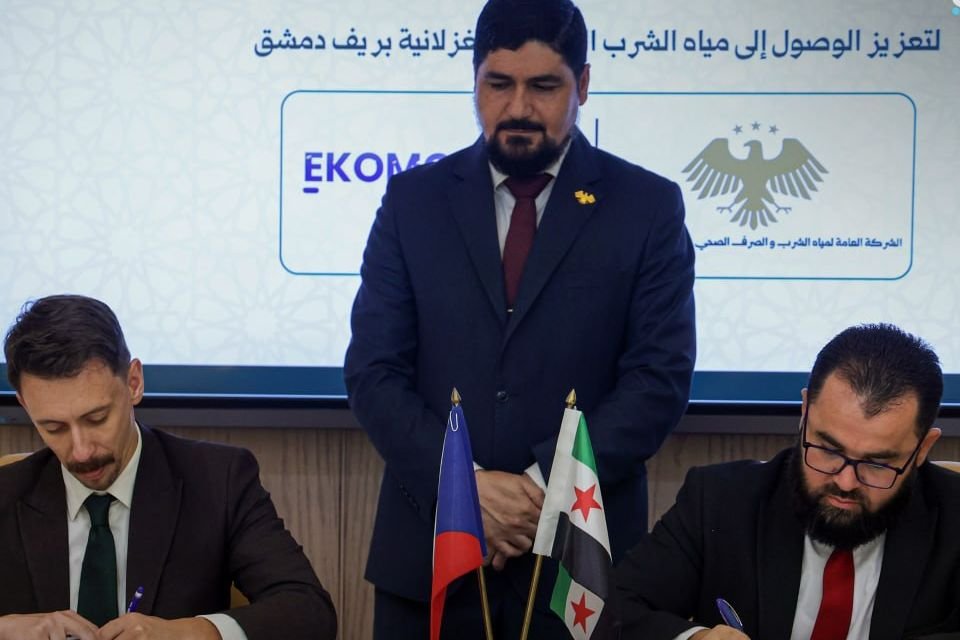
The General Establishment for Drinking Water and Sanitation in Damascus has formally signed a cooperation agreement with the Czech company Ecomonitor, marking a new phase in efforts to secure clean and reliable drinking water for the residents of the Ghizlaniya region in the countryside of Damascus.
The initiative, which was finalized this Wednesday, is designed to enhance the existing water infrastructure through targeted technological and mechanical upgrades. According to the provisions of the agreement, the project will be executed through a grant provided by the Czech government, which is part of an ongoing program dedicated to supporting reconstruction efforts within Syria.
Key components of the project include the comprehensive rehabilitation of a local water facility and the installation of a specialized water desalination station. In a move to ensure the long-term sustainability of the operation and address energy-related challenges, the project also incorporates the integration of a solar power system. By equipping the station with solar technology, officials aim to maintain consistent functionality for the water network, mitigating the impact of power supply fluctuations that have historically affected utility services across the region.
This partnership follows a series of similar collaborative efforts between local Syrian water authorities and international partners aimed at restoring and modernizing infrastructure. Last year, the General Establishment for Drinking Water and Sanitation in Damascus and its counterpart in the countryside of Damascus entered into a significant cooperation agreement with the Czech Embassy. That initiative focused on the establishment of two major water purification plants in New Adra and Yalda, also located in the Damascus countryside. The scope of that previous agreement included the maintenance of aging networks, the construction of new distribution pipelines, and a general effort to improve the quality of potable water, with an estimated project value reaching approximately 830,000 US dollars.
The latest venture in Ghizlaniya represents a continuation of the state’s strategy to prioritize the restoration of essential services. By focusing on essential utilities such as drinking water, authorities are seeking to improve living conditions in areas that have been heavily impacted by the years of conflict. The move underscores the role of international cooperation in supporting the broader reconstruction of critical public sector facilities across the governorate of Rif Dimashq.
