Damascus Outlines National Recovery Strategy to European Union
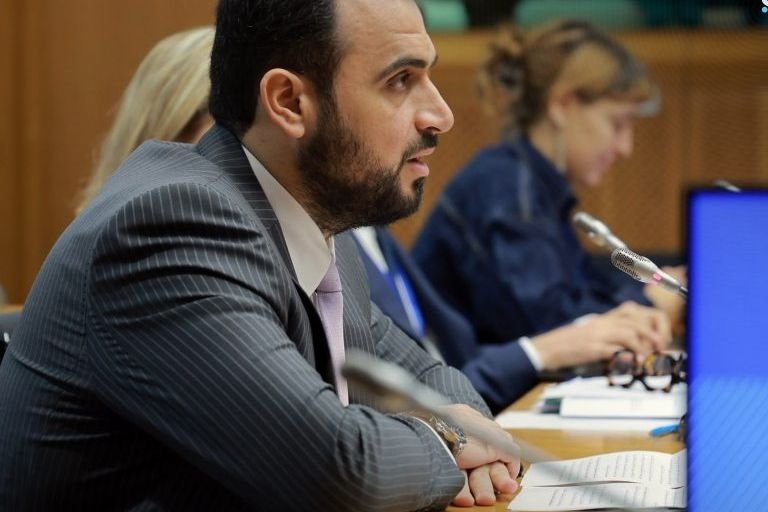
Qutaiba Qadish, Director of International Cooperation at the Syrian Ministry of Foreign and Expatriates Affairs, has confirmed that Syria is undergoing a strategic transformation in its international role and relationships. Speaking before the Maghreb and Mashreq Working Group of the Council of the European Union in Brussels, Qadish emphasized that Damascus is focused on restoring its institutions and solidifying its position as an effective partner for regional and international security.
Qadish stated that Syria seeks to establish balanced and constructive relations with European nations, viewing Europe as a natural partner in securing a more stable future. He noted that the developments in Syria since December 2024 have fundamentally altered the state’s character and its engagement with both its citizens and the international community. According to Qadish, the country has shifted from a source of regional tension to an active partner in combating terrorism and organized crime. He highlighted Syria’s serious cooperation with international bodies regarding the legacy of chemical weapons and its participation in the international coalition against ISIS.
Addressing security concerns, Qadish warned against Israeli incursions into Syrian territory. He argued that these actions undermine recovery efforts and threaten the 1974 Disengagement of Forces Agreement, calling upon the international community to support Syria’s sovereignty and territorial integrity.
On the economic and services front, Qadish acknowledged positive developments in Syrian-European relations, including the easing of sanctions and the resumption of political dialogue. However, he stressed the urgent need to remove financial and banking barriers that currently obstruct trade finance and investment, as well as the necessity of reviewing travel risk classifications. He outlined a four-pillar national recovery framework centered on rehabilitating infrastructure, restoring basic services, strengthening socio-economic resilience, and improving public administration efficiency.
To ensure effective coordination, Qadish announced the development of three key instruments: the “Syrian Partnership Coordination Forum” to organize projects, a “Technical Assistance Center” to build national capacities, and new development financing mechanisms. He also expressed a desire to expand cooperation with the European Investment Bank and the World Bank through the Support for Transition and Recovery (START) fund.
Concluding his address, Qadish affirmed that Syria is not asking Europe to build its future, but rather inviting it to form a strategic partnership that empowers Syrians to rebuild their nation themselves. He emphasized that success in reconstruction and institutional restoration would be a shared benefit for Syria, Europe, and the entire region. He urged a shift from humanitarian pledges to tangible development projects, facilitated through direct communication channels between national institutions and European counterparts.
Source: Syria Focus Arabic
