
Palmyra Oasis Rehabilitation: A New Step to Revive Homs Agriculture
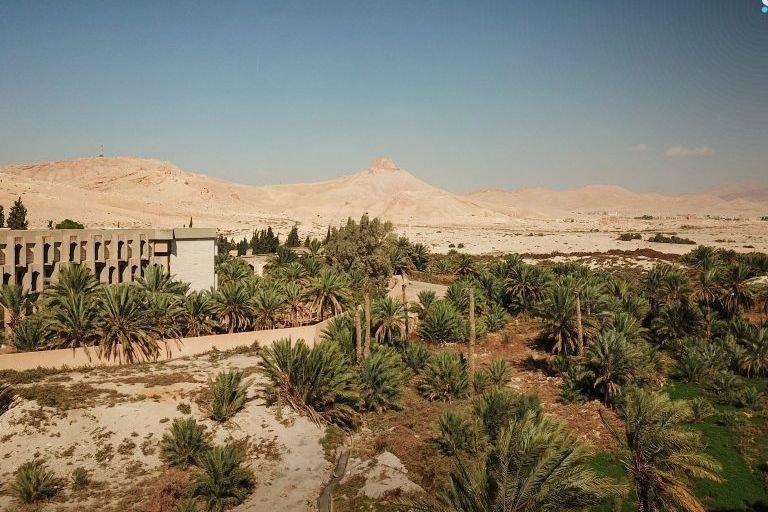
Authorities in Homs Governorate have launched the first phase of a strategic project aimed at rehabilitating the Palmyra agricultural oasis. The initiative is part of an intensive effort to revitalize damaged orchards and provide sustainable irrigation water sources for local farmers.
Engineer Ayman Shamma, Assistant Director of Water Resources in Homs, stated that the current phase of the project focuses on the rehabilitation of two primary wells, L9 and L9A, which serve as the main water source for the oasis. This project is part of broader efforts to restore the agricultural sector in the region, encouraging farmers to return to their lands and resume the productive activities that have long served as a fundamental livelihood for the people of Palmyra.
Rabie Ameer, head of the Palmyra Irrigation Center, noted that fieldwork is proceeding according to a three-month schedule. The project includes the restoration and clearing of irrigation canals spanning a length of three kilometers. The operations also involve pouring approximately 180 cubic meters of concrete in the most damaged sections to ensure water reaches the fields efficiently. The first phase of this project covers an area of 200 hectares, with future plans to expand operations to cover the oasis’s entire target area of 400 hectares.
Local farmers, including Khalid Al-Jumaa, emphasized the significance of these works in addressing the extensive damage inflicted on agricultural infrastructure, which has included the destruction of irrigation networks, electrical systems, and the filling of wells. Farmers indicated that the return of irrigation water would directly contribute to saving the olive and palm groves for which Palmyra is famous, noting that securing water is the top priority for restoring life to the oasis.
The Palmyra Oasis is considered one of the most prominent agricultural hubs in the Syrian Badia. In recent years, it has suffered from systemic damage to its channels and electrical networks, leading to a significant decline in agricultural activity. These service projects are part of government efforts to rehabilitate vital infrastructure in affected areas and provide the necessary inputs to support local stability and the restoration of agricultural production.
Source: Syria Focus Arabic
