
Returning Syrian Artisans Face Hurdles to Restarting Production
Many Syrian artisans who were forced to leave their homes and workshops during the years of conflict now face significant challenges upon returning to the country to resume their work. For these individuals, their trade is not merely a source of income, but an essential part of their identity and professional heritage that now requires immense effort to restore.
The experience of Samer Obeid, a furniture maker from Saqba in the Damascus countryside, illustrates the scale of these difficulties. After years of displacement and living abroad in Turkey, Obeid returned to find the arduous task of rebuilding his workshop and acquiring new equipment. He must also contend with rising production costs and difficult market conditions. Obeid emphasizes that restoring the industrial standing for which Eastern Ghouta was known requires tangible support, including accessible loans, reliable access to energy at affordable prices, and the promotion of external exhibitions.
Similarly, Tareq Al-Nabulsi, a specialist in bag manufacturing, recounts a journey that began in his father’s Damascus workshop in 1996, before circumstances forced him to leave in 2015. Following periods spent in Turkey and Egypt, Al-Nabulsi returned with high hopes, only to be confronted by the need for significant capital to revive his project. He underscores the importance of initiatives aimed at financing small and craft-based enterprises.
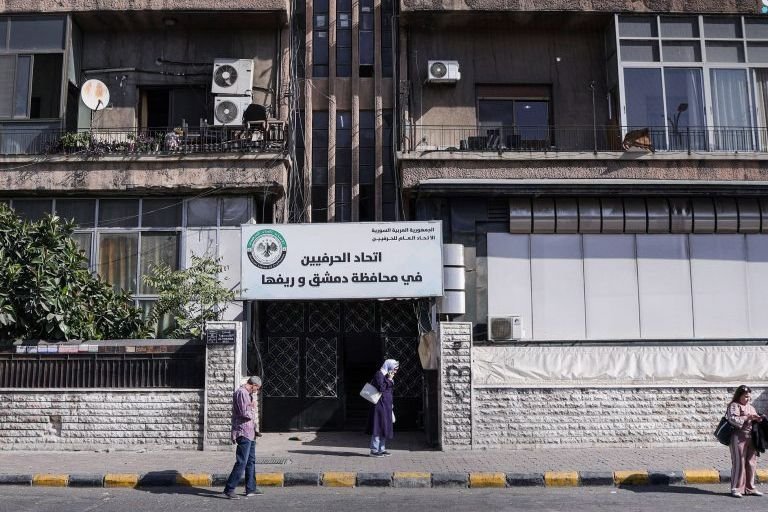
At the official level, the General Union of Artisans and the Small and Medium Enterprises Development Authority have announced a series of measures to support returning professionals. Mohamed Khaled Turkmani, head of the Artisans Union in Damascus, its countryside, and Quneitra, explained that the union is working to simplify membership procedures and provide training opportunities. Furthermore, the union is coordinating with Islamic banks to offer soft loans backed by professional certification, removing the need for complex real estate guarantees. Turkmani also noted ongoing marketing efforts via the ‘Craftsmen’s Workshop’ online platform and specialized exhibitions, designed to help artisans reach a wider consumer base.
In a related effort, Ehab Zakoor, director of the Small and Medium Enterprises Development Authority, revealed that training and rehabilitation programs are being developed in cooperation with the United Nations Industrial Development Organization (UNIDO) and the Islamic Development Bank. These initiatives aim to empower artisans to resume their professional activities and modernize their production tools. Despite these efforts, there remain urgent calls to address tax burdens accumulated during years of inactivity. The union confirms that this issue is currently under discussion with the relevant financial authorities to find equitable legal solutions that will support the recovery of local production.
Source: Syria Focus Arabic
