
Documentary Highlights History of Hama’s Ancient Qanat al-Ashiq
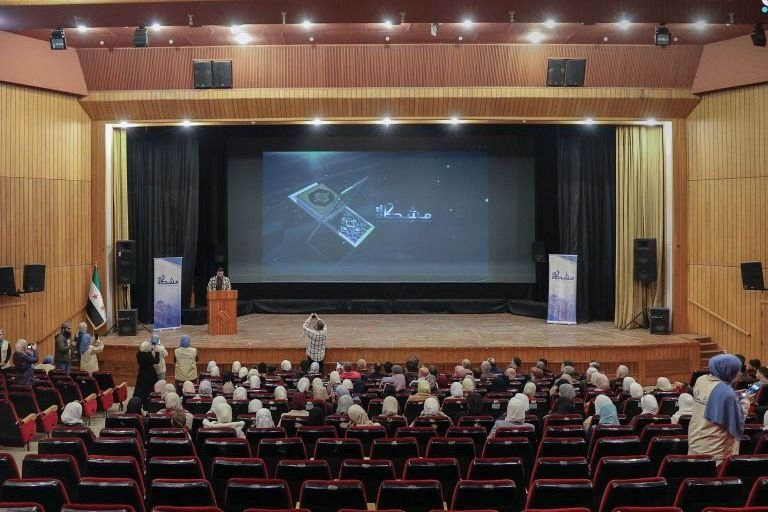
The Hama Directorate of Culture hosted a screening of the documentary film “Qanat al-Ashiq” on Sunday evening, marking the International Day for the Conservation of Intangible Cultural Heritage. The screening reflects ongoing national efforts to protect archaeological landmarks, promote cultural and cinematic activity, and highlight historic water infrastructure that showcases ancient engineering and architectural mastery.
Directed and written by Dr. Mustafa Maghmouma, the film was presented at the Hama Directorate of Culture to an audience of academics and members of the public. The work aims to archive Syria’s urban history, utilizing an engaging visual medium to move beyond traditional methods of documentation. Attendees praised the individual effort and the use of modern digital techniques, including artificial intelligence, to bring the memory of archaeological sites to life.
Mohammad Al-Obaid, an official at the Hama Directorate of Culture, explained that the Qanat al-Ashiq is a unique engineering feat dating back approximately 2,000 years. The structure once spanned 150 kilometers, connecting the Salmiya region in the east to the ancient city of Apamea in the west. Al-Obaid noted that the canal was designed with precise calculations to maintain a specific slope, ensuring consistent water flow despite harsh climatic conditions and desertification. He further emphasized that the channel was a central component of a vast irrigation system that also included the waterwheels and conduits of Hama, playing a vital historical role in the development of agriculture in the region.
According to historical research, including the “Atlas of the Orontes River Basin” published by the Graduate Institute of International and Development Studies, the canal was constructed during the reign of Roman Emperor Trajan between 116 and 117 AD. Historical records also indicate that the structure suffered partial damage during the major earthquake that struck the region in 1157. It was later fully restored, and its flow paths were modified toward Hama in 1491.
This cinematic documentation serves as a step toward promoting cultural tourism in Hama and reintroducing parts of the basalt canal that had been neglected for long periods. By serving as a visual reference that connects younger generations to their civilizational history, the project underscores the importance of integrating technology into the preservation of Syria’s national heritage.
Source: Syria Focus Arabic
