
Aleppo Military Court Sentences Defendants for Coastal Violations
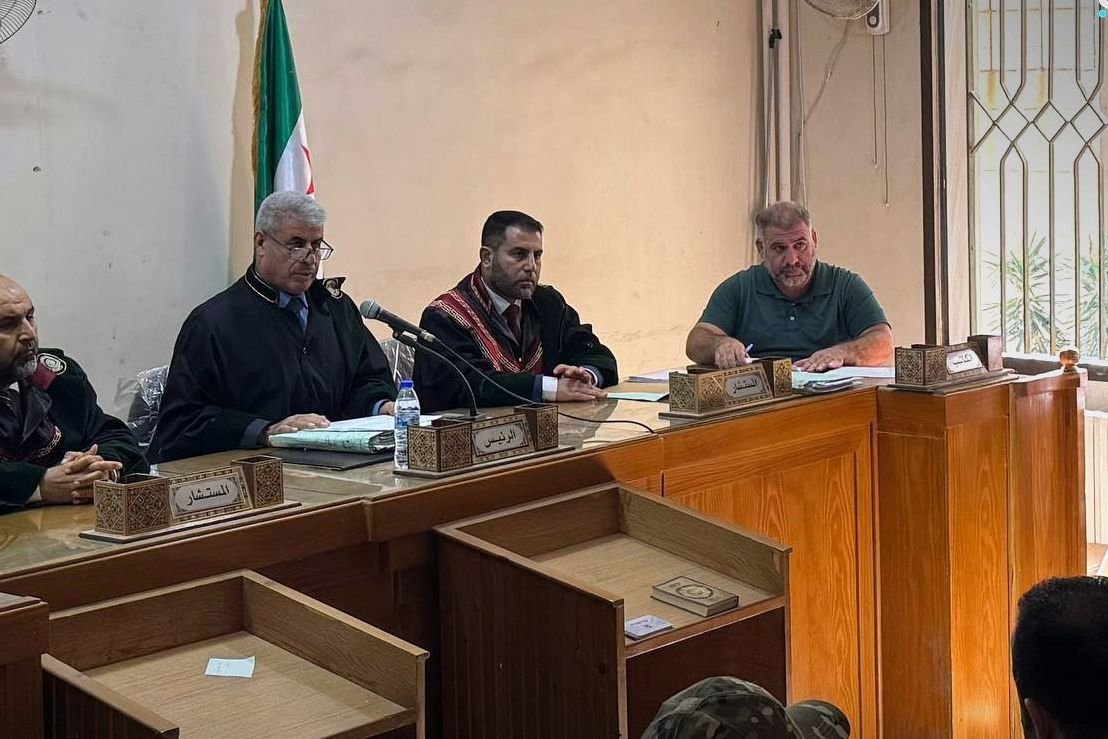
The Military Criminal Court in Aleppo held a public session on Thursday to deliver verdicts in the cases of individuals accused of committing violations during the recent events in the coastal region. The proceedings were conducted as part of an ongoing judicial process, attended by the victims’ families and relevant judicial authorities.
The court issued final judgments against three defendants. Al-Waddah Ismail and Maher Ali were both sentenced to death after being convicted of two primary charges: engaging in criminal activities intended to incite civil war and sectarian strife, and leading armed gangs with the intent of attacking public forces. Additionally, the court sentenced a third defendant, Maher Othman, to 12 years in prison, finding him guilty of complicity in the aforementioned crimes.
These rulings represent the latest stage in a series of public trials that commenced on November 18, 2025, at the Palace of Justice in Aleppo. Throughout the trial, the court held sessions dedicated to the presentation of evidence and the consideration of legal defenses submitted by the accused. On September 17, the judiciary issued rulings against four other defendants involved in the same case, with sentences ranging from death and life imprisonment to 20-year prison terms, while one defendant was acquitted.
The cases are rooted in the findings of the National Committee for Investigation and Fact-Finding regarding the events in the coastal region, which released its final report on July 22, 2025. The committee’s report detailed that on March 6, 2025, remnants of the former regime carried out widespread attacks targeting army and security headquarters, resulting in the death of 238 personnel.
The investigations further indicated that the subsequent violations targeting civilians were not organized, but were instead perpetrated by individuals and small groups acting on varying motives. The committee characterized these actions as individual and sporadic, lacking any systematic pattern. The court continues to review the case files of those associated with these violations in ongoing public sessions, as part of its commitment to ensuring the rule of law.
Source: Syria Focus Arabic
