
Latakia Health Directorate Promotes Breast Cancer Early Detection
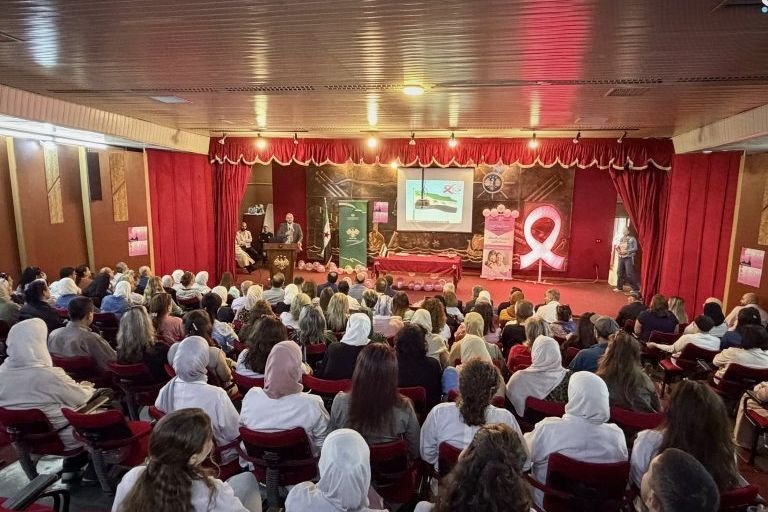
The Health Directorate of Latakia Governorate organized an extensive awareness event on Thursday at its headquarters under the slogan “Earlier Screening, Greater Hope.” This initiative is part of ongoing efforts to raise health awareness regarding the importance of routine examinations and the early detection of breast cancer, while also providing reproductive health services and essential health education for women.
Khairiya Dabbagh, Head of the Communicable and Non-Communicable Diseases Department at the Latakia Health Directorate, stated that the directorate oversees an extensive network of 80 health centers distributed throughout the province. These facilities provide a comprehensive package of services, including reproductive health support, early detection procedures, and training for women on self-examination techniques. Furthermore, the centers focus on disseminating health knowledge concerning the risks of the disease, methods of prevention, and the importance of regular medical check-ups.
Regarding available medical equipment, Dabbagh confirmed the presence of four mammogram machines dedicated to radiological screening located at the National Hospital, the Children and Maternity Hospital, Al-Hafeh Hospital, and Qardaha Hospital. She also noted that ultrasound devices for breast examinations are available at all hospitals affiliated with the Health Directorate and independent health institutions. A formal referral system is in place to direct patients to specialized centers should any findings require further diagnostic or clinical attention.
Samia Banshi, the Reproductive Health Officer at the Primary Healthcare Department of the Directorate, explained that while the Ministry intensifies these efforts during October—recognized globally as “Pink Month”—the national campaign for early detection remains active throughout the year and is not limited to a specific timeframe.
During individual and group awareness sessions held both inside and outside specialized centers, medical staff interview women to document their medical histories, assess risk factors, and conduct clinical examinations. If any concerning signs are identified, women are immediately referred for the appropriate radiological examinations based on their specific case and age group.
Banshi emphasized the importance of regular self-examination as a daily health habit. She noted that statistics indicate approximately 85 percent of self-detected lumps are benign. She further stressed that early detection significantly increases survival rates, which can reach between 90 and 95 percent, thereby enhancing recovery prospects and empowering women.
The Syrian Ministry of Health maintains that the success of these national campaigns relies on integrated cooperation between government institutions, organizations, local communities, and citizens, noting that promoting early detection is a collective social responsibility aimed at preserving the health and well-being of the community.
Source: Syria Focus Arabic
