
Damascus Hosts Workshop on Documentary Filmmaking Excellence
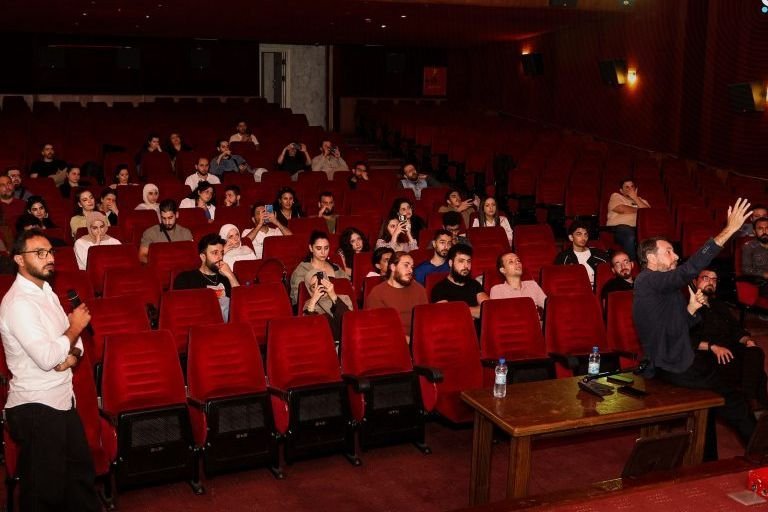
The General Organization for Cinema in Damascus recently hosted a specialized workshop dedicated to the art of documentary filmmaking. The event saw significant participation from directing students and provided an interactive platform for attendees to explore international standards in the industry through practical demonstrations and screenings of various documentaries in both Arabic and English.
The workshop was led by the Italian director and producer Leonardo Cinieri Lombroso. Throughout the sessions, Lombroso detailed the essential stages of documentary production, beginning with the initial conceptualization and the rationale behind a project, and moving through to treatment methods and the preparation of pitch decks. He emphasized that filmmakers should strive to offer unique content that has not been explored previously. Regarding technical preparation, he advised that a standard pitch deck should be approximately 15 pages in length, while teaser trailers should ideally remain under three minutes.
A central feature of the program was the technical summary of the documentary titled “Horror in Southeast Asia.” The film takes viewers on an exploratory journey through Malaysia, Thailand, and Indonesia, blending elements of feature-length documentaries with series formats. It illustrates how folklore and mythology intertwine with reality, supported by firsthand accounts from filmmakers and cultural experts. Lombroso noted that the film examines the complex relationship between humans and the environment in Southeast Asia, utilizing various cinematic styles—including documentary, narrative, experimental, and animation—to showcase the experiences of local communities.
During discussions with the students, the Italian director provided a comprehensive overview of international platforms for documentary distribution, such as the Amsterdam Forum, the Leipzig Co-Production Market, the Barcelona Film Production Platform, and the Berlin Documentary Film Salon. Lombroso expressed his confidence in Syria’s significant potential for producing high-quality documentary films. He remarked that global interest is increasingly directed toward Syrian talent, which he expects will garner support for projects that reflect the richness of the Syrian environment and its cultural identity.
The workshop concluded with a screening of the 65-minute documentary “When You Cannot Go Back.” The film chronicles the story of Obeida, a Syrian student who moved from Aleppo to Rome on a scholarship. It highlights the challenges of living abroad and the journey of personal success, offering an inspiring look at human passion and migration. This initiative is part of the General Organization for Cinema’s broader efforts to collaborate with international directors to develop the skills of young Syrians, demonstrating a commitment to the ability of national talent to produce high-quality cinematic works on both local and international stages.
Source: Syria Focus Arabic
