
Al-Zablatani Market: Damascus’ Vital Hub for Agricultural Distribution
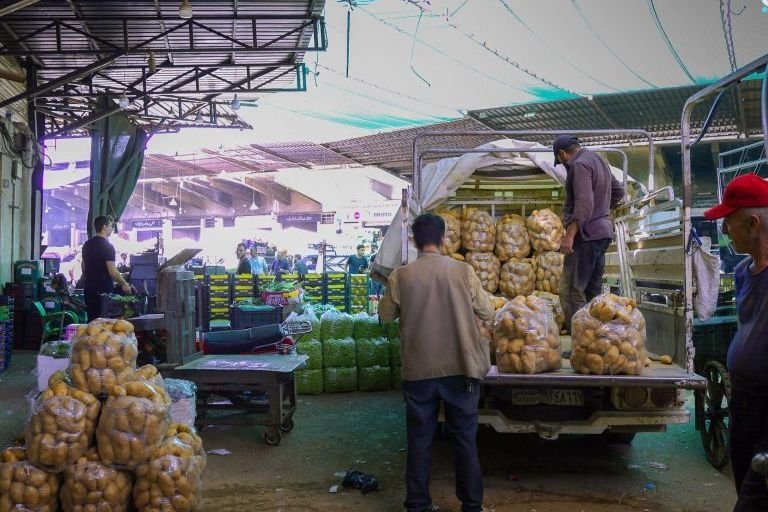
The Al-Zablatani wholesale market in Damascus serves as a primary pillar of Syria’s agricultural economy. As the central hub for the collection and coordination of produce, it facilitates the movement of agricultural goods arriving from various provinces across the country. Every day, the market experiences high levels of activity as trucks loaded with a wide variety of vegetables and fruits arrive for unloading, sorting, and classification based on quality. These goods are then prepared for distribution to local markets in Damascus and its countryside, to other provinces, or for export when surpluses are available.
Osama Qaziz, head of the market’s steering committee, explained that pricing mechanisms within the market are directly influenced by supply and demand laws, as well as the volume of daily shipments. He noted that shifts in production areas and changing agricultural seasons play a key role in determining price levels and crop availability. Qaziz emphasized that transportation costs are the most significant component of a product’s marketing expenses, meaning any increase in transport fees or production requirements has an immediate impact on the final price paid by the consumer.
Mohammad Al-Aqqad, a member of the market’s steering committee, highlighted the diverse sources of the supply chain. Produce arrives regularly from the provinces of Daraa, As-Suwayda, Homs, Hama, Tartus, Latakia, and the Damascus countryside. He pointed out that additional costs, including those for loading, unloading, packaging, storage, and long-distance transport, add to the overall marketing burden. Consequently, merchants and suppliers must carefully balance these expenses to ensure the consistent flow of goods to the market.
Traders and suppliers within the facility stress that the precise sorting process performed upon the arrival of shipments is essential for maintaining crop quality, particularly for perishable items, and for minimizing waste. Merchants explained that increased supply during peak seasons typically contributes to price stability or reduction. Conversely, shortages in supplies amidst steady demand create upward pressure on prices. The traders noted that their most significant current challenge is the rising cost of logistics and production inputs, which continues to tighten their profit margins.
Established in the late 1980s, the Al-Zablatani market was designed as a modern replacement for the city’s older wholesale market, which was previously located between the Sarouja area and King Faisal Street. The move was necessary to accommodate the rapid urban growth and increased traffic congestion in Damascus. Today, the market houses hundreds of commercial shops that operate around the clock to ensure the steady supply of vegetables and fruits for the Syrian market.
Source: Syria Focus Arabic
