500 Years of Giving: The Harisa Table at the Sheikh Muhyiddin Mosque
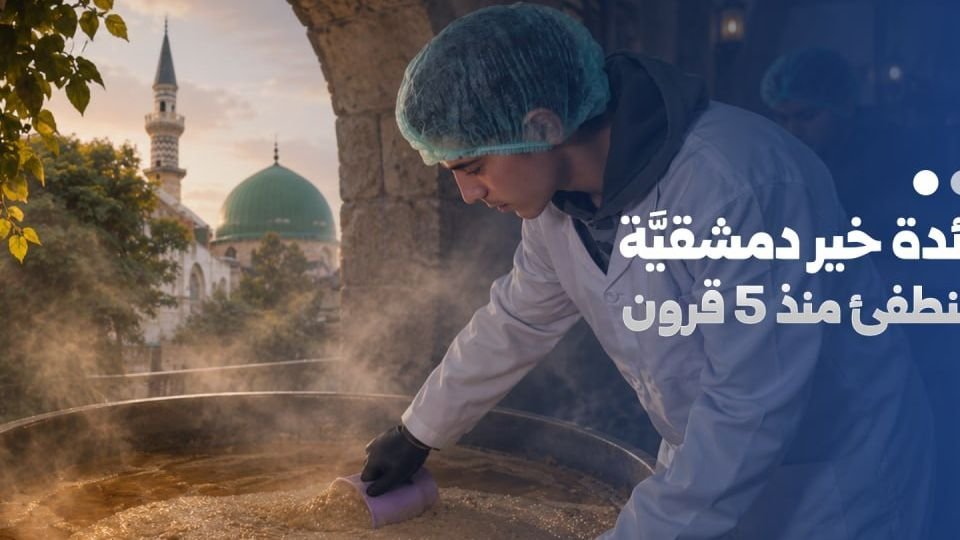
The Sheikh Muhyiddin ibn Arabi Mosque in Damascus stands as more than just a place of worship; it is a historic and spiritual landmark that serves as a focal point for social and humanitarian traditions passed down through generations. Chief among these is the “Harisa Table,” a tradition of providing food that has endured for 500 years, becoming an integral part of the social and cultural identity of the Syrian capital.
The Harisa Table at the Sheikh Muhyiddin Mosque serves as a living embodiment of the culture of giving and mutual support that has characterized Damascus for centuries. Despite the passage of time and various historical shifts, this tradition has remained steadfast. People gather around this table, which continues to provide meals for mosque visitors, the needy, and travelers alike, transforming the mosque into a space that strengthens bonds between different segments of society.
This tradition is deeply linked to the historical identity of the area, as the Sheikh Muhyiddin Mosque is located in the historic Al-Salihiyah neighborhood at the foot of Mount Qasioun. The harisa itself, a traditional Damascene dish made of wheat and meat, is prepared according to precise, time-honored methods. It is distributed in an atmosphere that reflects the spirit of love and cooperation prevalent in Damascene society. The continuation of this practice for half a millennium reflects the resilience of Syrian society in preserving human heritage that places human dignity and the fulfillment of basic needs at the core of its concerns.
The table attracts many locals and visitors daily, serving not only as a source of nourishment but also as a symbol of consistency and historical continuity in Damascus. This tradition is viewed as a model of community-led initiatives that originated centuries ago and continue to play a significant social role today. Through such practices, Syrian society draws upon values of steadfastness and solidarity, which remain prominent even in the most challenging circumstances. Consequently, the Sheikh Muhyiddin table remains a testament to the deep-rooted history of Damascus and the cohesion of its social fabric.
Source: Syria Focus Arabic
