
Tartus Business Leaders Address Fuel Station Operational Challenges
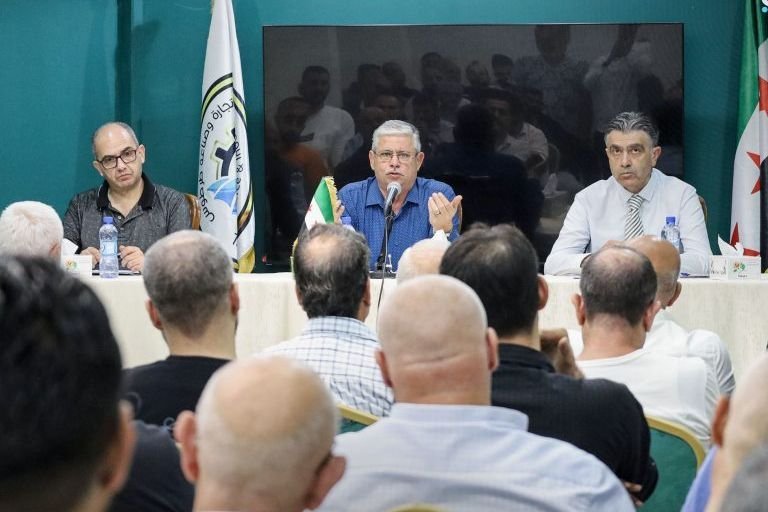
The Tartus Chamber of Commerce and Industry recently convened an extensive meeting involving fuel station owners and key stakeholders in the province’s energy and fuel sector. The session was organized to review and discuss the operational and logistical challenges currently facing fuel stations in the region, with the aim of fostering cooperation between the private sector and relevant government authorities to ensure service stability.
Fadi Saba, a member of the executive office of the Tartus Governorate Council responsible for the energy sector, attended the meeting to hear firsthand the complaints and daily operational difficulties reported by station owners. Saba affirmed that the governorate is committed to escalating these concerns to the Ministry of Energy to facilitate the removal of obstacles and the development of effective solutions.
Meanwhile, Mohammad Hamoud, Treasurer of the Tartus Chamber of Commerce and Industry, announced that the Chamber will draft an official memorandum outlining all the issues raised. This document is to be submitted to the President of the Federation of Syrian Chambers of Commerce to ensure the concerns are brought to the attention of the appropriate authorities and that viable mechanisms for continued operation are established.
During the discussions, fuel station operators highlighted several significant challenges. Chief among these is the impact of volatile fuel prices, which complicates financial cash flow. Additionally, station owners expressed concerns regarding the mandate to maintain a mandatory fuel reserve equivalent to 20 percent of a facility’s total storage capacity, a requirement they described as an added financial burden.
The meeting also addressed the technical requirements for upgrading older fuel stations. Participants noted that meeting these modern technical standards demands substantial capital investment, which is particularly difficult to manage given the prevailing economic pressures.
Despite these accumulated operational hurdles, the station owners emphasized their commitment to maintaining services for the public and explicitly rejected the possibility of suspending operations. They stressed the urgent need for tangible solutions to address rising maintenance costs and the necessity of creating a more favorable administrative environment for their work.
Fuel stations in Tartus, much like those in other regions of Syria, are grappling with mounting pressures stemming from price instability and the critical need for infrastructure upgrades that meet current technical standards. The Chamber of Commerce has stepped in to coordinate these demands and relay them to the government level, hoping to secure decisions that will safeguard the long-term viability of this vital sector.
Source: Syria Focus Arabic
