Idlib Enhances Administrative Efficiency Through Ethical Leadership
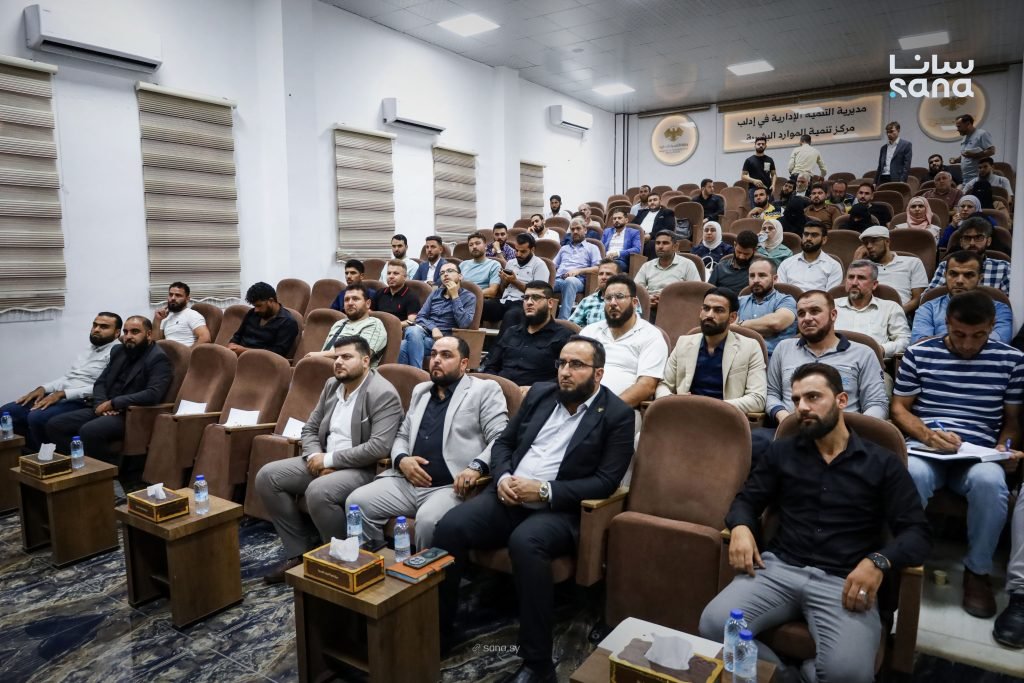
The Administrative Development Directorate in Idlib has launched a series of interactive workshops aimed at modernizing public sector management and fostering a culture of high-performance within government institutions. The initiative, which recently held its latest session at the Human Resources Development Center, focuses on equipping department heads and government staff with advanced tools to improve organizational output.
Led by Syrian academic and management consultant Amer Al-Nimr, the program emphasizes the intersection of professional ethics and administrative efficiency. The latest session brought together approximately 60 participants, including department heads and senior staff, to address core challenges in contemporary government work. Key curriculum pillars included functional engagement, the application of ethical leadership, administrative intelligence, and the systematic engineering of institutional productivity.
One of the central themes of the training is the shift away from traditional, rigid administrative structures. By fostering a environment where ethical standards are integrated into daily operational systems, the directorate aims to enhance both the speed and quality of public services. Al-Nimr emphasized that institutional productivity is deeply linked to the level of trust established within a team, suggesting that leadership must prioritize both the psychological well-being of the workforce and the technical metrics of performance evaluation.
“The objective is to move beyond conventional management styles and introduce practical frameworks for building and sustaining high-performance teams,” explained Mulham Dbeis, head of the Capacity Building Department at the directorate. He noted that the transition involves teaching leaders how to move away from archaic management models, instead opting for a dynamic approach that focuses on clear performance indicators and meaningful delegation.
For the Administrative Development Directorate, these seminars represent a broader strategy to revitalize the public sector. As the demands on government institutions evolve, the need for a workforce that is not only technically proficient but also morally grounded has become a priority. Officials believe that by standardizing these training methods, they can create a more resilient administrative system capable of addressing the complex requirements of the current era.
Beyond immediate skill-building, the program aims to establish a measurable system of accountability. By teaching participants how to track performance and manage internal energy levels—often referred to in the workshop as ‘institutional energy hierarchy’—the directorate hopes to minimize waste and ensure that public resources are managed with integrity. The sessions serve as a pilot for more comprehensive, varied training programs scheduled for the coming months.
Participants were encouraged to engage in open dialogue regarding leadership obstacles, particularly those related to team cohesion and internal communication. The success of these interactive forums, according to officials, will be measured by the long-term impact on administrative performance and the continued willingness of department heads to adopt more transparent, merit-based management practices. Through these efforts, Idlib’s administrative bodies seek to professionalize their operations and instill a culture of continuous institutional growth.
