
Ministry of Education Outlines Plans to Manage Rising Student Enrollment
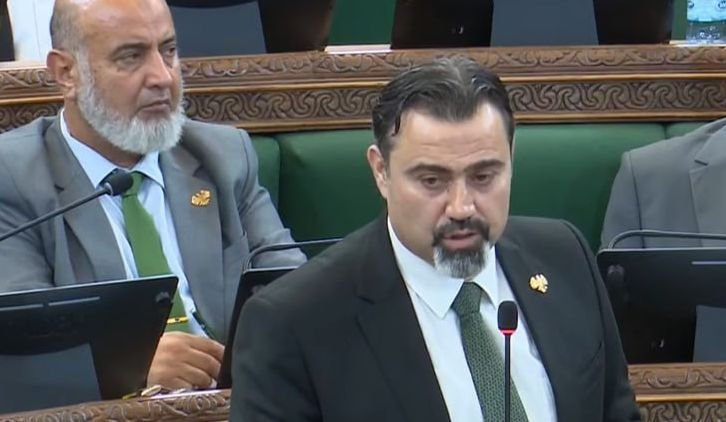
The Minister of Education has presented the government’s comprehensive roadmap for the development of Syria’s educational system before the People’s Assembly. The strategy addresses the challenges posed by a steady rise in student enrollment, which is projected to reach approximately 6 million students during the current academic year. The Minister noted that this surge is a natural outcome of the return of refugees, displaced persons, and students who had previously dropped out, alongside natural population growth. He emphasized the Ministry’s commitment to securing the right to education for every Syrian child through both emergency and long-term strategic plans aimed at building a more robust and equitable system.
To combat the issue of school dropouts—estimated at approximately 2 million students—the Minister highlighted close coordination with the Ministry of Social Affairs and Labor and a specialized government team. This cooperation aims to tackle the underlying economic and social drivers of the phenomenon. Furthermore, the Ministry has implemented flexible administrative procedures, including the adoption of conditional enrollment for returning students who lack identity documentation. These students are granted a one-year grace period to complete their paperwork, and the process for degree equivalency has been simplified via a new, advanced electronic system.
Regarding the workforce, the Minister reported that the Ministry manages an extensive network of 339,000 personnel. Plans are underway to optimize the distribution of staff across governorates and address vacancies. Approximately 14,000 previously dismissed teachers who meet the required criteria have been reinstated, and legislation is being drafted to ensure their formal employment and the recognition of their years of service. Additionally, a draft law regarding teacher affairs has been completed, which establishes a professional ranking system to ensure fair performance evaluations. A localization policy is also being implemented, transferring thousands of contract staff to their primary areas of residence.
In terms of curricula and the educational environment, the Minister announced the implementation of a unified curriculum for the first time, ending the use of four previous educational systems. As part of this initiative, 41 million textbooks have been printed and distributed. Special attention is also being given to infrastructure rehabilitation; the Ministry is working to restore damaged schools to service and is developing digital infrastructure to support interactive educational platforms designed to meet modern standards.
Finally, the Ministry is currently working to enhance digital transformation across all its operations, ranging from the automation of public examination procedures to the inclusion of digital verification codes on official documents. A specialized directorate for quality and accreditation has been established to classify schools based on precise criteria, including faculty, infrastructure, and examination results. The Minister concluded by urging the People’s Assembly to prioritize educational legislation in upcoming sessions to support the development of this vital sector.
