
Protests Erupt in Syria Following Hike in Fuel Prices
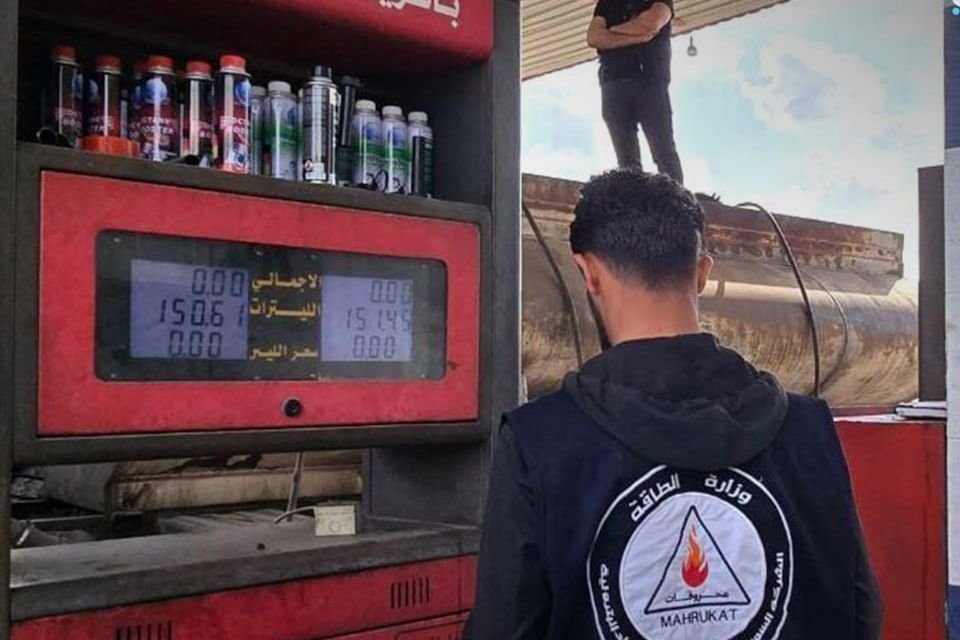
A decision to increase the prices of oil derivatives came into effect in Syria on Sunday. The Ministry of Energy justified the move as a temporary measure necessitated by extraordinary pressures on global import costs and a decline in domestic refining capabilities.
The implementation of the new price list was met with protests in several governorates, where citizens called for the decision to be rescinded or reconsidered. In some locations, demonstrators set fire to tires and blocked major roads.
The Ministry of Energy explained that the price adjustment was the result of a sharp increase in the global cost of securing oil derivatives. Simultaneously, the Baniyas refinery has entered a comprehensive maintenance phase expected to last approximately two months. This has reduced local production capacity and increased reliance on the import of finished products.
According to ministry data, the daily market requirement reaches approximately 300,000 barrels of oil and its derivatives, while local production does not exceed 100,000 barrels, much of which does not fully meet refinery specifications. The local market relies heavily on imports, with about 60 percent of diesel requirements—as well as significant quantities of gasoline and domestic gas—secured from abroad. The ministry noted that the price of a ton of diesel currently approaches $1,400, while gasoline nears $1,350, creating significant financial pressure to ensure the continued flow of supplies.
The ministry emphasized that this measure is not intended to be a permanent price hike, but rather a step to bridge the financing gap and secure the necessary liquidity to purchase new shipments. It pointed to significant financial obligations in the energy sector, noting that the dues owed by the electricity sector to the Syrian Petroleum Company reached approximately $1.7 billion this year.
In response, several governorates, including Hama, Daraa, Raqqa, Deir ez-Zor, and Al-Hasakah, witnessed popular unrest. Protesters expressed their opposition to the rising prices and the resulting impact on their living conditions. Some of these demonstrations involved the blocking of vital transportation arteries, including the M4 highway and the Damascus-Aleppo international road, as well as a partial strike by public transport drivers in certain areas.
Official authorities confirmed that prices will remain subject to continuous review based on developments in global energy markets. They stated that conditions are expected to stabilize once the Baniyas refinery returns to full production capacity following the completion of maintenance work. The government also underscored the necessity of moving forward with strategies to enhance domestic production and rehabilitate oil infrastructure to reduce reliance on external market fluctuations.
