
59 Years Since the Displacement of Golan Residents: Memories of Return
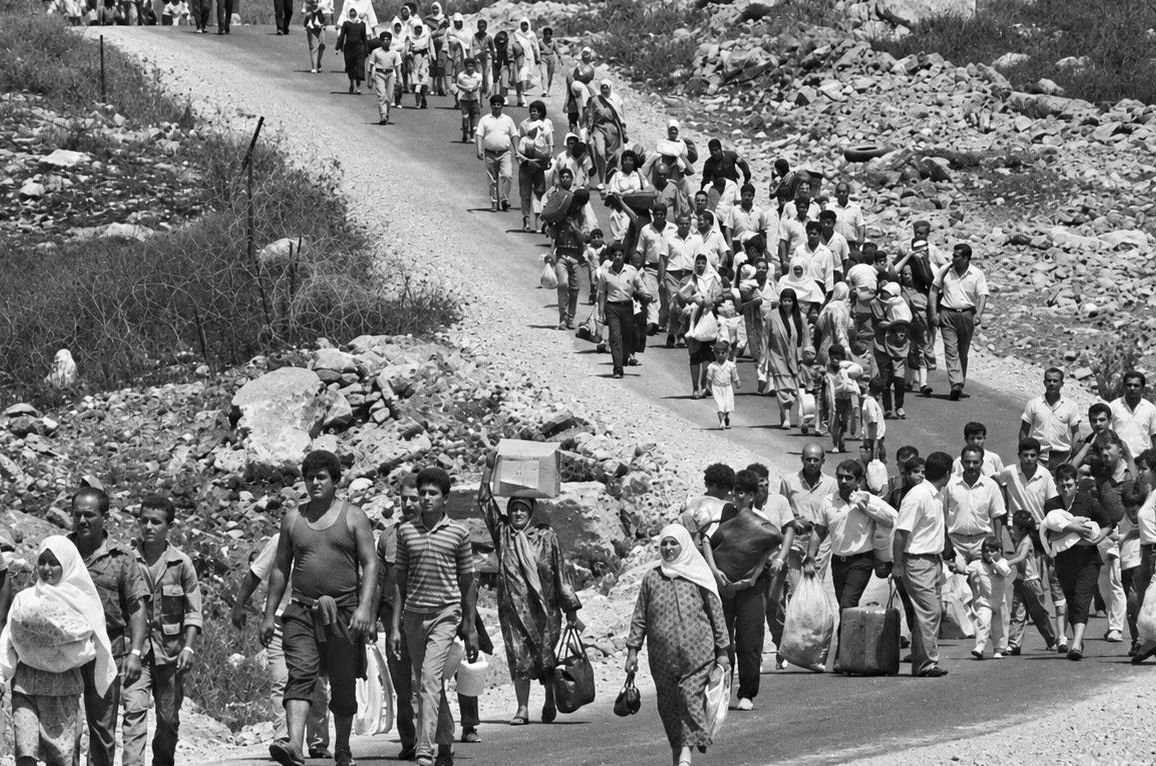
For 59 years, Syrians displaced from the occupied Golan Heights have preserved a living memory of their land and homes. The Israeli occupation of the territory in June 1967 transformed what many families initially expected to be a temporary departure into a decades-long wait that continues to this day.
For Ahmad, who was born and raised far from the Golan, the village of Al-Ahmadiyah is a place he knows in intimate detail through the stories of his grandmother, “Umm Khaled,” and his father, “Abu Ahmad.” Though he has never stepped foot in the village, he describes a profound sense of ownership over a home he has never entered and roads he has never walked. These places remain an inseparable part of his identity and family history, kept alive by his grandmother’s constant recollections of harvest seasons, weddings, and the traditional songs that once filled the Golan’s villages.
His father, Abu Ahmad, who left his village at the age of twelve, often recounts the arduous journey to his school in the village of Al-Sanaber. He remembers the difficulties of the trek, which he would complete either on foot or on the back of a donkey, braving harsh winter weather alongside other village children. The memory of his childhood friend, Khalil, remains vivid; Abu Ahmad recalls how Khalil would carry him on his back to help him cross streams during the rainy season. These small, poignant details serve as a testament to the close-knit social life that the residents were forced to abandon.
United Nations estimates indicate that approximately 140,000 Syrians were forced to leave their homes in the Golan following the 1967 occupation. Over the intervening decades, nearly half a million Golan natives have settled in Damascus and its countryside, forming a community that has maintained a strong bond with its roots despite the passage of time and significant demographic shifts.
Today, the Golan stands as a symbol of resilience and longing for three consecutive generations: a grandmother who left behind the memories of her youth, a father who departed in his childhood, and a grandson who carries the dream of return. Despite the long duration of their displacement, the stories of those who left remain a human testament to the enduring connection between Syrians and their land. Their persistence in passing down this love for the Golan to future generations underscores their belief that returning is not merely a hope, but a fixed historical right in their collective memory.
Source: Syria Focus Arabic
