
National Transitional Justice Commission Prioritizes Chemical Crimes
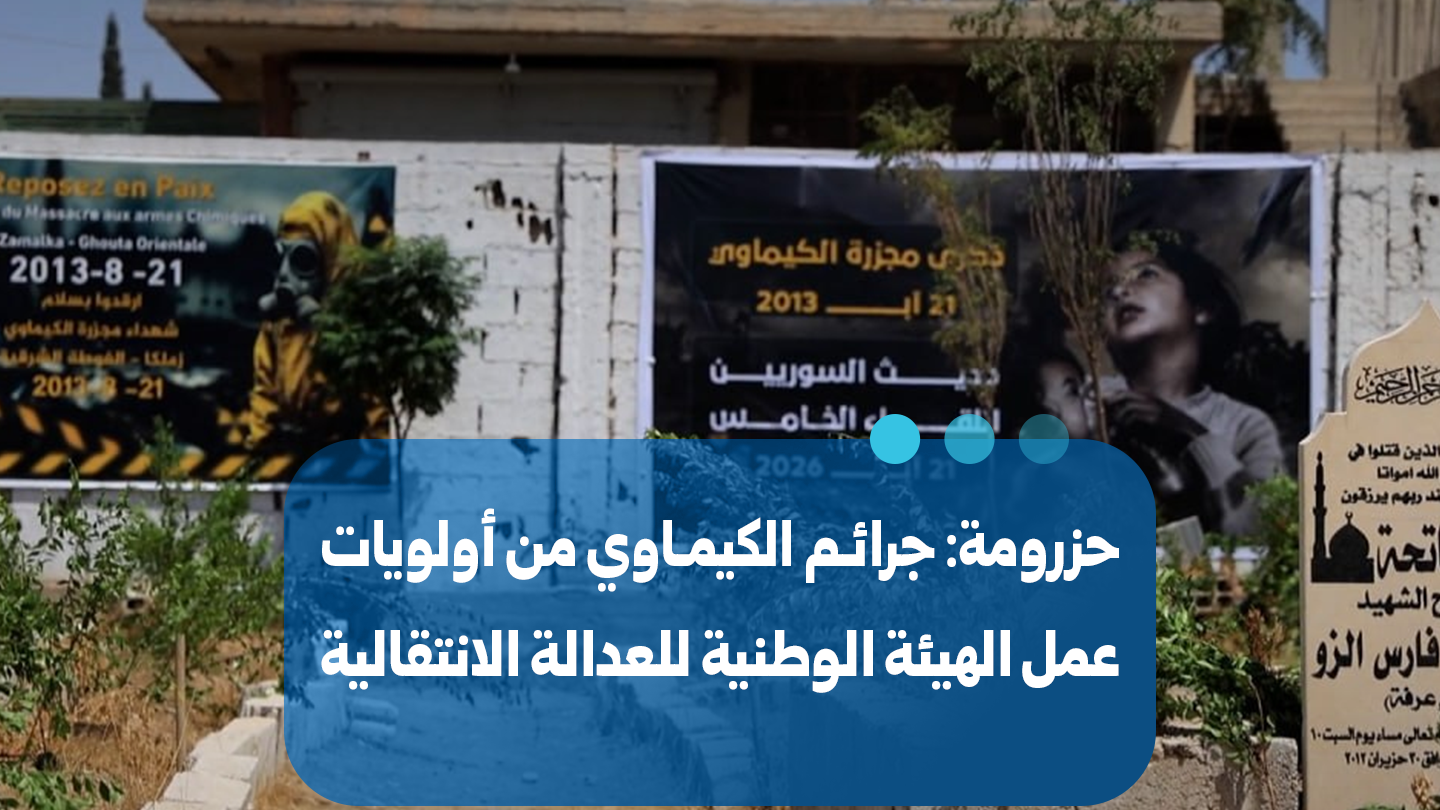
The Syrian National Transitional Justice Commission has officially announced that addressing crimes involving chemical weapons is a primary focus of its current institutional agenda. In a statement to the state-run news outlet, Commissioner Hazrouma emphasized that the commission is dedicating significant resources and operational priority to documenting and investigating these incidents as part of its mandate regarding transitional justice.
This development marks a significant step in the commission’s efforts to institutionalize its work, particularly regarding events that have had a profound impact on the nation. By prioritizing these specific cases, the commission aims to align its activities with broader national goals related to accountability and the legal processing of sensitive security and humanitarian concerns. The focus on chemical incidents is intended to provide a structured approach to addressing allegations and documentation related to the use of such weapons during the ongoing Syrian conflict.
Since its inception, the National Transitional Justice Commission has sought to create frameworks capable of handling complex historical and legal challenges. By highlighting chemical crimes, the commission is signaling its commitment to addressing matters that are of both domestic significance and international concern. The inclusion of these crimes within the commission’s priority framework suggests a shift toward more formalized, centralized investigative work aimed at establishing a record of these events.
While the commission continues its broader efforts, the decision to explicitly list chemical crimes as a priority reflects an institutional acknowledgment of the gravity of such incidents. The commission’s leadership has indicated that this work will continue to be a pillar of its operations as it fulfills its role in overseeing transitional justice processes within the country. This effort is expected to be part of an ongoing multi-faceted strategy to address the aftermath of past developments and provide the necessary oversight for national reconciliation and legal clarity regarding the most severe violations reported over the past several years.
Further details regarding the methodology and the specific scope of the investigations remain part of the commission’s internal planning, as it continues to work within the legal and regulatory frameworks governing state institutions in Syria. The commission remains tasked with ensuring that all findings are handled with the necessary institutional rigor, reflecting its formal mandate to serve as a key entity in the national landscape of justice and accountability.
