Damascus Hosts Judicial Meeting to Combat Money Laundering
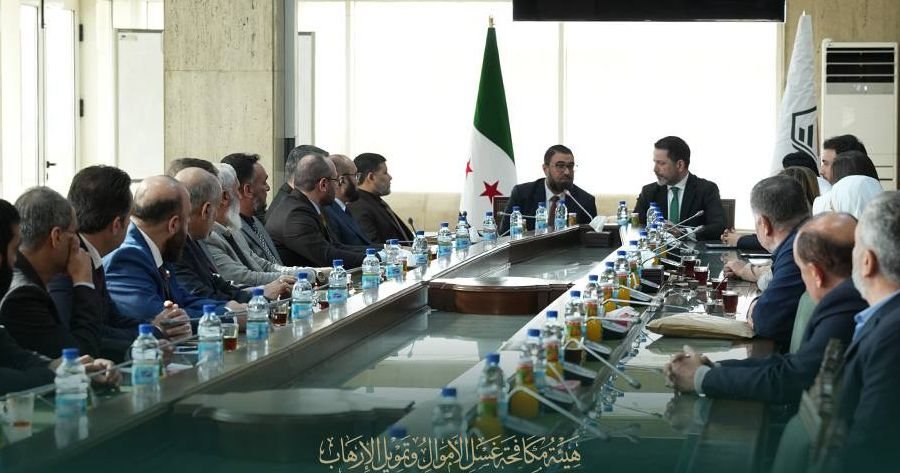
A wide-ranging judicial meeting was held in Damascus to strengthen the national framework for combating money laundering and the financing of terrorism. The session, which took place in cooperation with the United Nations Development Programme (UNDP), was attended by a number of Syrian judges, Minister of Justice Mazhar Al-Wais, and the Head of the Anti-Money Laundering and Terrorism Financing Commission, Safouh Raslan.
The discussions focused on the pivotal role of the judiciary in implementing international standards to combat financial crimes. A key objective of the meeting was to ensure Syria’s operational readiness for upcoming mutual evaluation processes conducted by the Financial Action Task Force (FATF) or its regional counterparts.
In a statement issued via its Telegram channel, the Anti-Money Laundering and Terrorism Financing Commission emphasized the strategic importance of judicial integrity and the effectiveness of the justice system in addressing these illicit activities. Participants underscored the necessity of activating legal tools to prosecute offenders, which they noted is essential for the rigorous application of relevant national legislation and the reinforcement of the rule of law across the country.
Furthermore, the attendees reviewed strategies to enhance coordination and cooperation among various agencies responsible for enforcing anti-money laundering requirements. Participants stressed the importance of integrating roles and responsibilities to ensure the effectiveness of the national system. These efforts are part of broader Syrian initiatives to bolster the readiness of financial and legal institutions to meet international standards. Such preparation is crucial for mutual evaluation exercises, during which member states assess one another’s compliance with global standards aimed at combating money laundering, terrorism financing, and the proliferation of weapons.
The mutual evaluation process is a comprehensive, periodic international review in which member states of financial action task forces evaluate each other through specialized teams of financial, legal, and executive experts.
At the conclusion of the meeting, officials reiterated that these steps represent a commitment to ongoing reform. Safouh Raslan, the Head of the Anti-Money Laundering and Terrorism Financing Commission, had previously reaffirmed this during his participation in the FATF plenary meeting at the end of last October. In his address at that time, Raslan highlighted Syria’s determination to move forward with reforms aimed at building a more transparent and flexible financial system. He emphasized the importance of translating these reforms into tangible practical measures and upgrading the Syrian banking sector to align with international requirements and standards in the field.
Source: Syria Focus Arabic
