
Strategies for Protecting and Developing Syria’s Forests
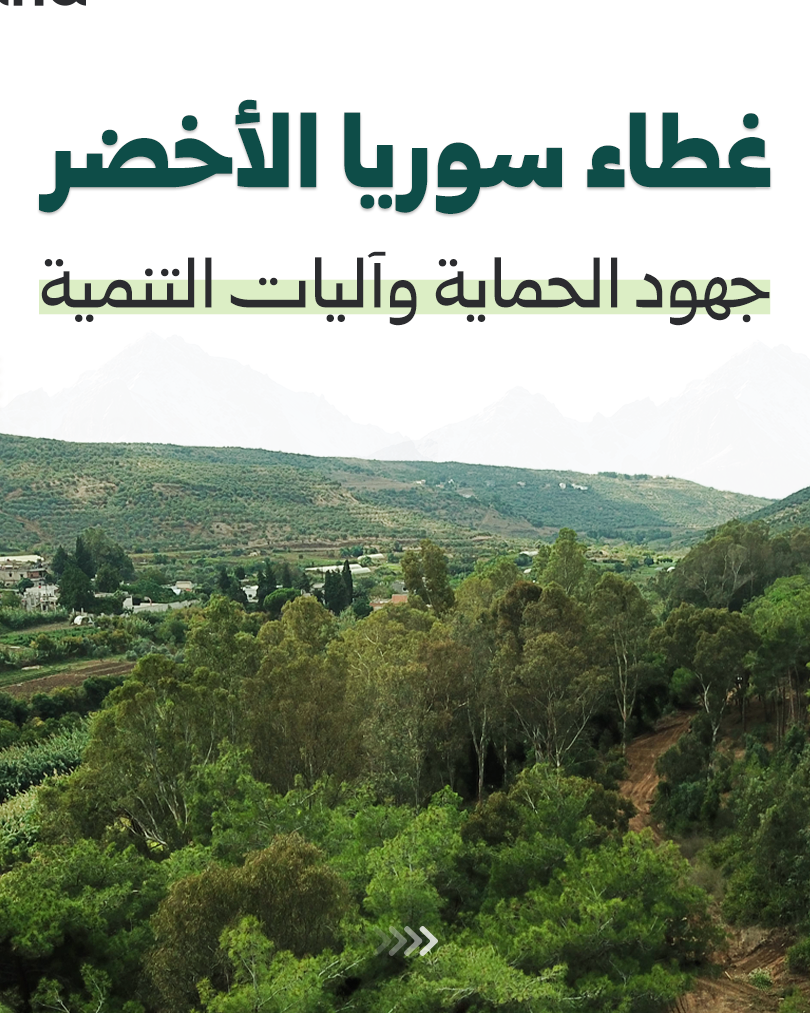
Syria’s forestry resources are currently facing significant environmental and developmental challenges. Recent data indicates that forest and woodland areas account for only 2.7% of the country’s total land mass. Given the vital role these areas play in maintaining environmental balance and addressing climate change, the protection and development of vegetation cover have become top national and environmental priorities.
Addressing the decline of these lands requires a multidimensional approach that integrates regulatory measures with technical and agricultural solutions. A primary step in this strategy is the strengthening of preventive oversight to mitigate encroachment and forest fires—the latter being among the most severe threats to the nation’s woodlands, particularly during the dry seasons. Efforts to protect existing forest areas must extend beyond enforcement; they must also encompass robust reforestation programs. This involves the systematic expansion of vegetation cover using tree species specifically suited to the Syrian climate, ensuring the long-term sustainability and durability of natural resources.
Beyond field-level interventions, there is a pressing need to foster community awareness regarding the environmental value of forests. Encouraging local initiatives and public participation in reforestation and the protection of forest sites is essential to the success of these programs. Effective forest development strategies require close coordination among relevant stakeholders to establish management plans aimed at expanding the country’s green footprint. These efforts must prioritize the most damaged regions, where urgent intervention and land rehabilitation are required.
Maintaining the current 2.7% forest cover and working toward its expansion represents a vital investment in Syria’s environmental and water security. Achieving this goal necessitates modernizing the management of nature reserves and forest regions, deploying advanced technology for remote monitoring, and enhancing infrastructure to facilitate rapid intervention during emergencies. The integration of efforts between government institutions and civil society remains the fundamental pillar for developing the forestry sector. By combining these efforts, Syria can ensure the sustainability of vital resources for future generations, particularly under current environmental conditions that demand meticulous protection of limited natural assets.
Source: Syria Focus Arabic
