
Rising Groundwater Levels Damage Farmland in Raqqa
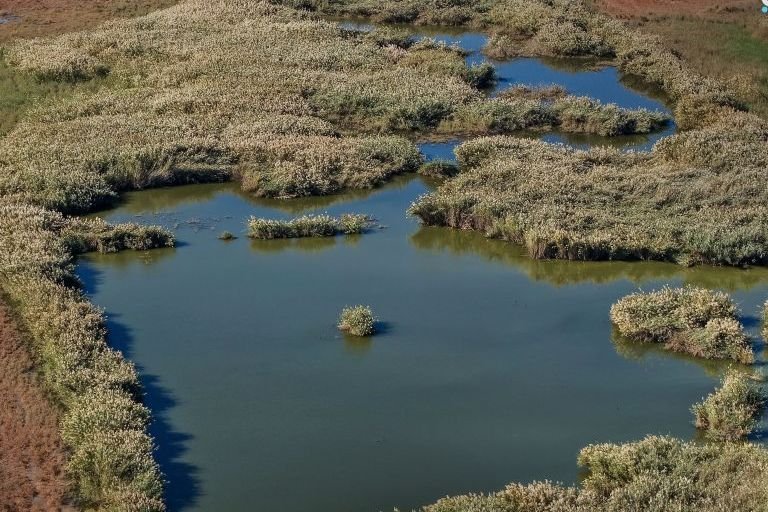
Agricultural lands in the Eastern Sahlabiya area of Raqqa Governorate are facing significant environmental and geological challenges due to a rising water table. This increase in groundwater levels has created tangible negative repercussions for the agricultural sector, which serves as the primary economic pillar of the region.
Field observations indicate that the impact of the rising water levels extends beyond mere soil saturation or a decline in soil quality. The phenomenon has also led to the appearance of natural sinkholes within agricultural fields. This development has triggered concerns among farmers in Eastern Sahlabiya regarding the potential for this phenomenon to spread, threatening the sustainability of agricultural production for both the current and upcoming seasons.
Eastern Sahlabiya is a region that relies heavily on farming. The rising groundwater disrupts the soil’s natural balance, which can hinder tillage operations. Furthermore, crops are being damaged by excessive soil saturation, and in some instances, the land has suffered from subsidence caused by the weakening of subsurface layers, leading to the formation of sinkholes.
These developments are placing additional pressure on farmers already navigating various challenges within the agricultural sector of Raqqa. Local residents are currently working to assess the extent of the damage to their land, while awaiting technical measures to address this natural phenomenon, which threatens vast areas of arable land in the region.
This situation highlights an ongoing need for precise geological and hydrological studies across Raqqa’s agricultural areas. Such measures are essential to ensure the safety of agricultural infrastructure and the health of the soil. These efforts are part of a broader push to protect crops from unpredictable natural factors that directly impact food security and the livelihoods of the local farming community.
Source: Syria Focus Arabic
