
Rif Dimashq Tightens Oversight on Olive Presses to Ensure Quality
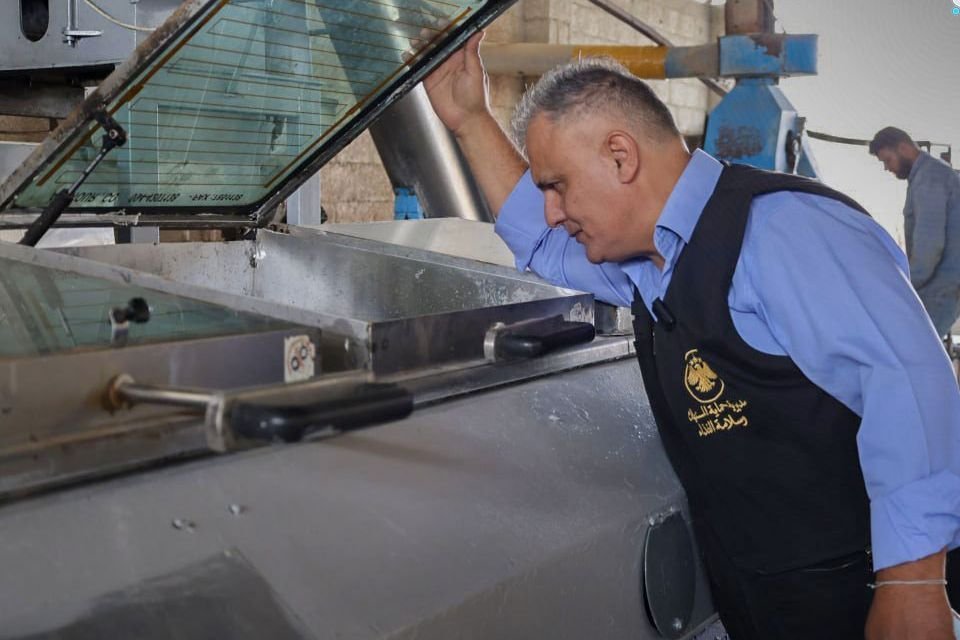
The Internal Trade and Consumer Protection Directorate in Rif Dimashq has launched a series of inspection campaigns targeting olive presses across the governorate. This regulatory effort coincides with the current olive pressing season, which officially began on October 20.
This initiative is part of a broader government drive to regulate production processes and ensure that olive press operators adhere to the officially mandated fees for pressing services. Furthermore, the inspections aim to verify that the oil produced and the by-products of the process meet established technical and health standards.
In a press statement, Abdul Salam Khaled, Director of Internal Trade and Consumer Protection in Rif Dimashq, announced the formation of a joint committee. This committee includes representatives from the ministries of Industry, Agriculture, and Internal Trade and Consumer Protection, alongside the Ministry of Local Administration and Environment and the Directorate of Water Resources. The committee is tasked with overseeing the operations of the presses and verifying their compliance with required professional and technical standards throughout the season.
There are approximately 26 olive presses located within Rif Dimashq. Currently, five of these facilities are inactive, while others are in the process of preparing to receive seasonal production. Khaled confirmed that inspection teams are actively and periodically collecting samples of produced olive oil, as well as samples of “jeft water” (by-products from the pressing process) and “pirm” (solid olive pomace), to undergo necessary laboratory testing at specialized facilities.
These measures are designed to closely monitor production lines within the presses, ensuring the cleanliness of equipment and adherence to approved health and technical conditions, thereby guaranteeing the quality of the final oil product. The director indicated that the specialized teams are documenting violations and taking legal action against offenders in accordance with applicable laws and regulations. This is intended to protect production safety and safeguard the rights of both farmers and consumers against potential fraudulent practices.
This intensified oversight is part of a wider strategy to strengthen consumer protection monitoring across Syrian governorates during agricultural seasons. The effort aims to ensure market stability, prevent the exploitation of farmers, and preserve the reputation of Syrian olive oil as one of the country’s most prominent strategic agricultural products.
Source: Syria Focus Arabic
