
Syria’s Forestry Sector: Managing 528,000 Hectares of Woodland
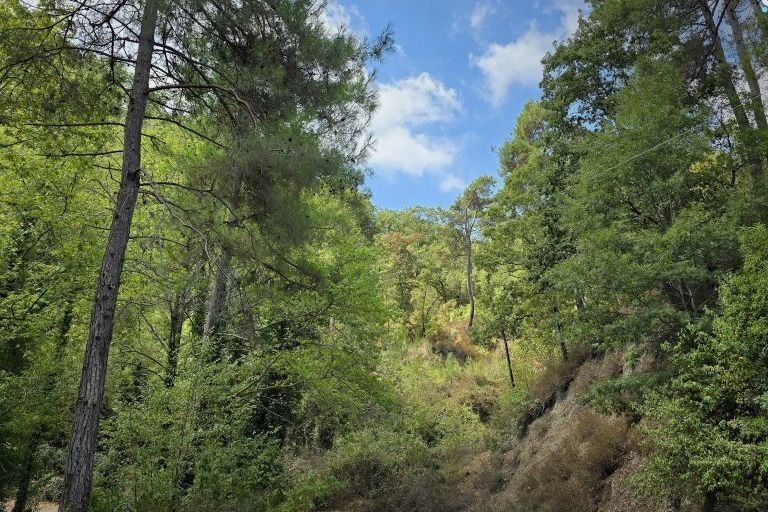
The Syrian Ministry of Agriculture’s Forestry Directorate has released updated data on the country’s total forest and woodland areas, which currently cover approximately 527,848 hectares. This figure represents about 2.7 percent of Syria’s total land mass, comprising 232,840 hectares of natural forests and 295,008 hectares of artificially reforested land.
According to the Director of the Forestry Directorate, Muthanna Al-Katea, the nation’s forest cover is facing increasing pressure from a variety of sources. Key challenges include climate change, declining rainfall, and frequent droughts, alongside illegal encroachment and unsustainable land-use practices.
Broad-leaved species currently dominate the landscape, with oak trees accounting for 58 percent of the forest cover. Conifers follow at 28 percent, a category that includes stone pine, brutia pine, and juniper. The forests also host a diverse range of other species, such as turpentine, eucalyptus, carob, Lebanese cedar, fir, and ash. Geographically, these woodlands are primarily concentrated in the governorates of Latakia, Tartus, Homs, Hama, and Idlib, with additional, more scattered sites located in the countryside of Damascus, as well as in southern and northeastern regions.
In an effort to protect these national assets, the Ministry has committed to annual maintenance programs for forestry roads and the construction of new firebreaks. These initiatives are designed to improve access for firefighting teams and heavy machinery while enabling forest rangers to monitor regions more effectively and curb illegal activities. The work plan for 2026 and 2027 focuses on the maintenance of over 3,000 kilometers of roads and firebreaks, with plans to expand protection networks tailored to the specific terrain and topography of each site.
Furthermore, the Ministry is modernizing its firefighting infrastructure by increasing the number of observation points, reactivating forest guard stations, and equipping field teams with mobile firefighting tankers for rapid response. Preventative measures also include the seasonal closure of forestry roads in high-risk areas, the regulation of grazing activities to match the land’s carrying capacity, and forest management practices aimed at reducing the accumulation of wildfire fuel. These technical steps are supported by public awareness campaigns.
To ensure rigorous enforcement, the Ministry continues to apply the national Forestry Law, which imposes strict penalties for illegal logging and the illicit timber trade. Authorities are also integrating modern technology into their strategy, including remote sensing and the “FIRMO” platform, to improve fire detection and monitoring.
These efforts come as many forested areas have faced significant damage in recent years, particularly during the summer of 2025. Extensive wildfires caused considerable harm to the country’s vegetation and biodiversity, prompting authorities to accelerate their response strategies and rehabilitation plans to help restore the ecological balance of Syria’s forests.
Source: Syria Focus Arabic
