
Syria Boosts Breast Cancer Early Detection Services in Daraa and Tartus
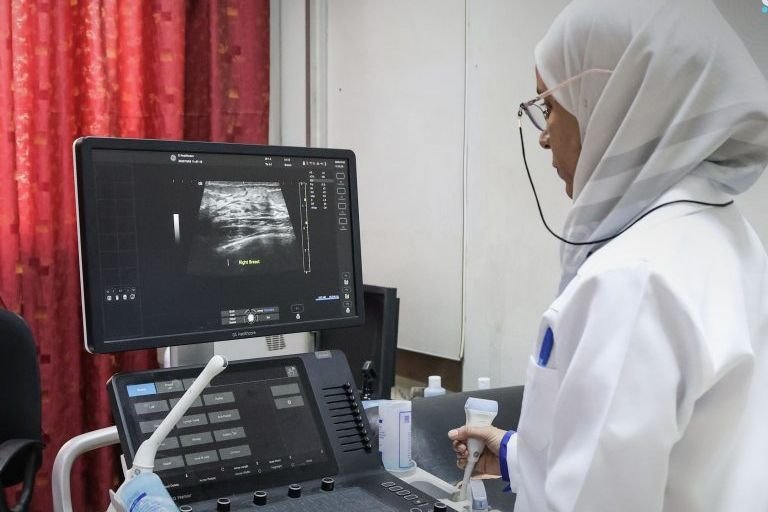
As part of its ongoing “Pink Month” campaign, the Syrian Ministry of Health is intensifying efforts across its provincial directorates to raise community awareness regarding the importance of breast cancer early detection and prevention. These activities are part of a national strategy aimed at expanding medical services and improving women’s access to diagnostic screenings.
In Daraa, the Health Directorate has launched a series of awareness initiatives at various health centers. These sessions provide comprehensive guidance on self-examination techniques and identify symptoms that require immediate medical consultation. Dr. Mohammed Ali Hamad, Director of the Daraa National Hospital, stated that the directorate has mobilized its resources to provide screening and imaging services at the national hospitals in Daraa, Nawa, and Izra, all of which are equipped with mammography and breast ultrasound units. Dr. Hamad noted that these services include the surgical evaluation of suspicious cases and the performance of necessary biopsies, in accordance with global medical protocols. Infrastructure in the governorate has also been strengthened this year with the addition of a new mammography machine at the Busra al-Sham National Hospital, bringing the total number of such devices in the province to four.
Simultaneously, Tartus is conducting similar campaigns. Dr. Numan Aqra, Assistant Director of the Tartus National Hospital, explained that surgical clinics are receiving patients throughout October to conduct necessary initial examinations before referring them to the radiology department for mammography and breast ultrasounds. Dr. Aqra emphasized the importance of fostering a culture of regular health check-ups that extends beyond the awareness month.
Dr. Rana Suleiman, a radiologist at the Tartus National Hospital, confirmed that the facility’s mammography unit operates year-round. The department currently screens between 15 and 25 women daily, with approximately 600 beneficiaries recorded over the past six months. Dr. Suleiman explained that screenings are determined based on clinical evaluation: women over the age of 40 are typically directed toward mammography, while ultrasound is utilized as the primary diagnostic tool for younger patients. She underscored that early detection is fundamental to reducing disease complications and increasing survival rates.
These efforts have received broad support from the public. Mervat Mahmoud Muhammad, a patient, encouraged all women to proactively seek regular screenings rather than waiting for symptoms to appear, highlighting the value of utilizing available public health services. Ahmad Qasim, a local citizen, echoed this sentiment, calling on families to support the women in their lives in obtaining regular check-ups to ensure timely diagnosis. These initiatives reflect the Ministry of Health’s commitment to improving healthcare delivery in line with global standards, which prioritize early screening as the primary defense against breast cancer and its associated mortality rates.
Source: Syria Focus Arabic
