
Daraa Honey Production Rises to 185 Tons This Season
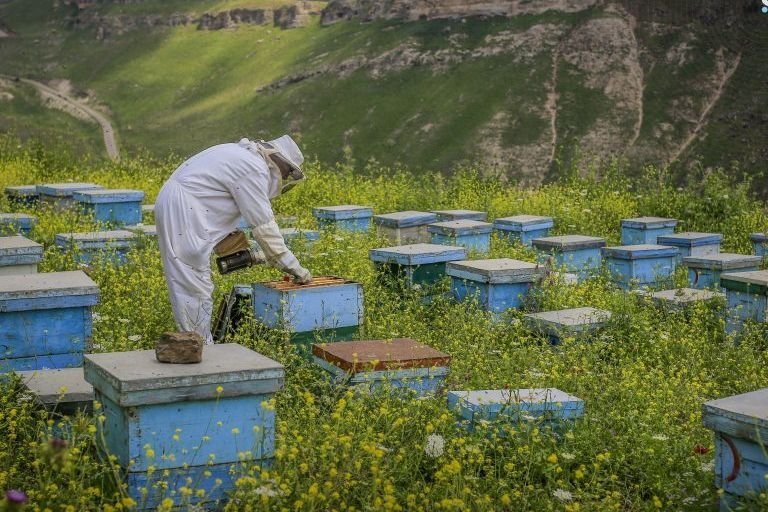
The beekeeping sector in Daraa province has recorded a significant increase in production during the current season, with total output reaching approximately 185 tons of honey, up from 135 tons recorded in the previous season.
Eng. Hassan Al-Ahmad, head of the Department of Agricultural Economics and Planning at the Daraa Agriculture Directorate, confirmed that the number of beehives in the province has grown steadily. The total count has risen to more than 26,000 hives, compared to approximately 25,000 in the previous year, highlighting the importance of the agricultural sector in the region.
Despite this growth in production, beekeepers face several challenges that threaten the sustainability and development of the profession. Eng. Hassan Al-Samadi, head of the Department of Agricultural Affairs and Plant Protection, noted that the spread of diseases such as Varroa and Nosema poses a significant risk to bee colonies. These diseases are often described as a “silent killer,” causing the death of large numbers of bees and resulting in substantial financial losses for producers.
Beekeepers in the town of Jumla, located in the western countryside of Daraa, have emphasized the practical and climatic difficulties they face. Jihad Al-Baridi and Yahya Al-Samouri, both local beekeepers, explained that harsh weather conditions, the rising cost of beekeeping supplies, and competitive marketing challenges are hindering further growth in production. Furthermore, the beekeepers pointed to security obstacles, specifically the difficulty in safely accessing hives located in the Yarmouk Valley. They cited frequent Israeli incursions in the area as a factor that prevents them from regularly and properly maintaining and caring for their hives.
In an effort to support the sector, the Syrian Ministry of Agriculture continues to implement programs aimed at improving the Syrian bee breed and upgrading the infrastructure of its research and administrative centers across the country. Government plans also include organizing grazing areas, providing extension services, and advancing scientific research. Additionally, there is a push to encourage investment in honey production and various hive by-products, in an attempt to address the obstacles facing beekeepers and ensure the continuity of this vital economic activity.
Source: Syria Focus Arabic
