
Idlib Markets Festival 2026 Launches with 96 Participating Companies
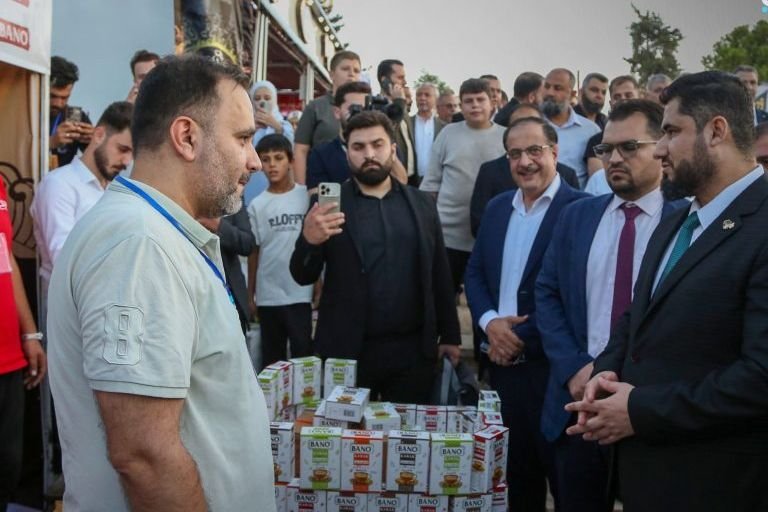
The “Idlib Markets Festival 2026” officially opened on Saturday evening in Idlib city, marking its second edition since the liberation. Held at the Tahrir Garden, the event has drawn a significant turnout from local residents, providing a dedicated space for businesses to showcase their products, engage with the public, and offer competitive market rates.
Festival Director Hamdo Harmoush stated that the current edition features a notable diversity of participants. The event hosts 96 companies spread across 160 exhibition booths, covering a wide range of economic sectors, including food production, apparel, detergents, chemical industries, and electrical goods. Harmoush emphasized that the primary goal of the festival is to revitalize commercial activity within the governorate and foster direct communication between manufacturers and consumers. Participating companies are actively competing by offering special promotions, discounts, and giveaways to visitors.
Beyond its commercial objectives, the festival serves as a recreational venue for the community. The event includes daily entertainment segments hosted on a dedicated stage and is scheduled to run for ten days, providing a social outlet for families.
Among the participants is a leading company in the food, dates, and biscuit sector. Maabad al-Khalid, the company’s sales manager, highlighted the significance of the festival, noting that his firm is returning to participate in Idlib after a 15-year hiatus.
Visitors have expressed satisfaction with the atmosphere and the price points, which many described as acceptable and more affordable than the standard market prices in the city. Many attendees view the festival as a prime opportunity for affordable family shopping.
The festival is part of a broader initiative led by the Ministry of Economy and Industry and the Syrian Exhibition Corporation to establish open markets across various Syrian governorates. The strategy aims to support local production, encourage economic growth, and stimulate trade in local markets.
