
Syria Takes Control of Tartus Port Pier Amid Regulatory Restructuring
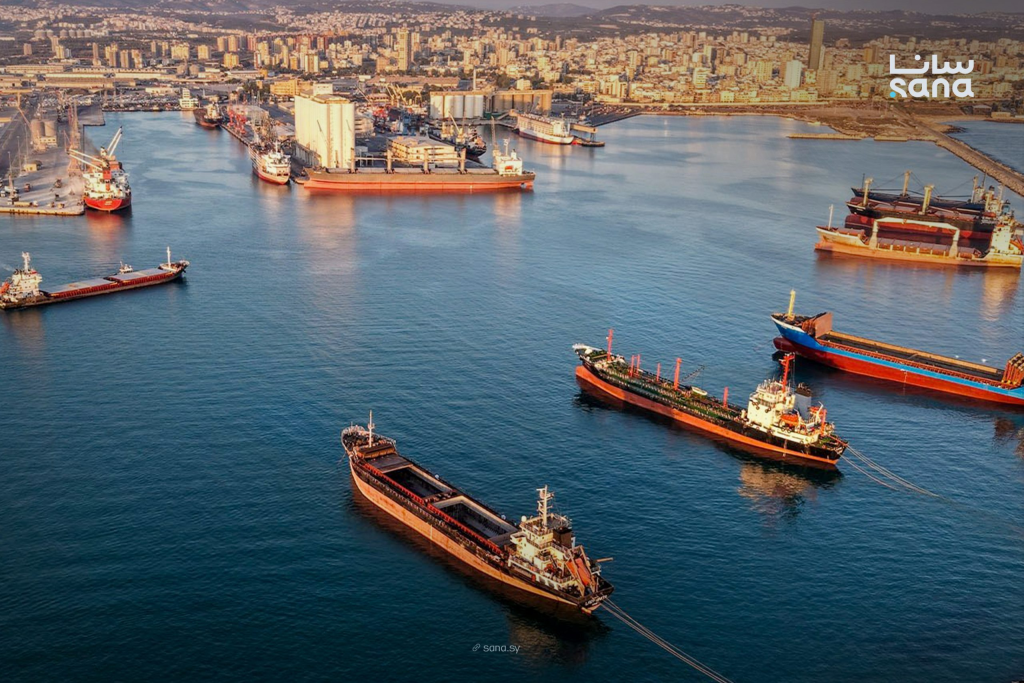
The Syrian government has officially assumed the management of the fourth commercial pier at the port of Tartus, marking a significant shift in the operational oversight of one of the country’s primary maritime gateways. The transition follows a memorandum of understanding reached with Russia after eighteen months of high-level diplomatic negotiations aimed at reorganizing the presence of Russian entities along the Syrian coast.
Under this new arrangement, the fourth pier is being integrated into the Syrian civil administration. The move is designed to boost the port’s operational capacity, streamline cargo handling, and alleviate the logistical congestion that has previously hampered throughput at other sections of the facility. By bringing the pier under direct state management, officials intend to optimize its use according to national economic priorities.
The fourth pier represents a critical asset for the port, stretching 630 meters in length. With a draft ranging from 10 to 13.2 meters, it is capable of accommodating three large vessels simultaneously, each with a carrying capacity of up to 55,000 tons. Its strategic location adjacent to the fifth pier—which specializes in Ro-Ro (roll-on/roll-off) vessels for vehicle transport—is expected to facilitate a more cohesive approach to unloading and storing diverse types of goods.
While the transfer of authority is seen as a gain for the Syrian state, economic experts emphasize that turning these operational gains into sustainable fiscal revenue requires significant investment. Beyond merely possessing the infrastructure, the port must undergo modernization to stay competitive. Key requirements include upgrading mechanical handling equipment, enhancing storage systems, and improving the connectivity of the port to inland road and rail networks.
The broader success of this transition remains contingent on the creation of a more favorable investment environment. Analysts suggest that for the port to evolve into a significant regional transit hub, the government must prioritize transparency in its management, simplify customs procedures, and strengthen the financial and banking services required for complex international trade operations.
In the immediate term, the priority is to utilize the pier to stabilize the domestic supply chain, particularly by facilitating the import of essential goods and materials necessary for reconstruction efforts. As the government begins to integrate these civil assets, the focus will remain on balancing the need for efficient logistics with the objective of maximizing national revenue. The potential for the port to serve as a bridge between the eastern Mediterranean and regional markets remains a long-term goal, provided that infrastructure investments and administrative reforms keep pace with projected trade volumes.
