
Syria Intensifies War Remnants Clearance in First Half of 2026
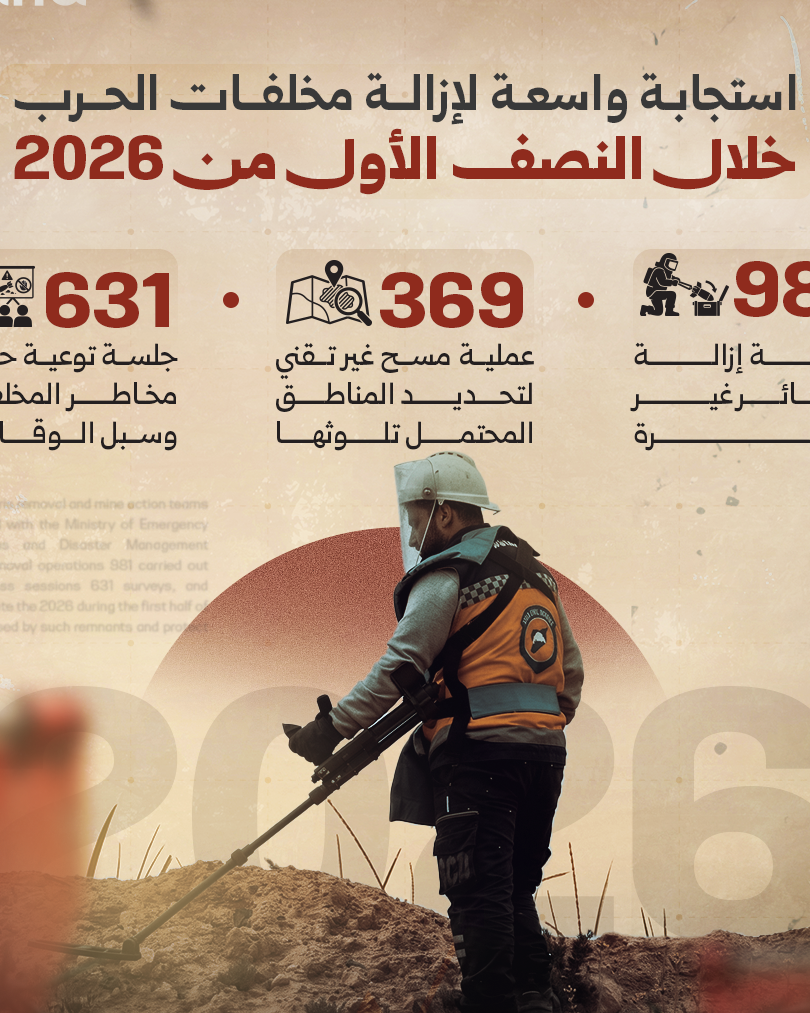
Official data released by the demining and war remnants clearance teams under the Syrian Ministry of Emergency and Disaster Management has highlighted the scope of operations conducted during the first half of 2026. These activities are part of an ongoing national effort to mitigate the dangers posed by remnants of war and ensure the protection of civilians across various Syrian regions.
According to the figures, specialized teams successfully executed 981 operations to clear explosive remnants of war and landmines that posed direct threats to public safety. These operations form a key component of a national strategy aimed at clearing affected areas and facilitating their rehabilitation, which is intended to strengthen community security and reduce accidents involving unexploded ordnance.
Beyond direct removal operations, the teams performed 369 comprehensive field surveys. These surveys are essential for assessing levels of contamination and identifying specific sites that require urgent intervention to ensure they are secured. This methodical approach allows teams to make data-driven decisions based on real-time findings, ultimately enhancing citizen safety and preventing injuries.
In tandem with physical clearance efforts, significant emphasis has been placed on preventative and educational measures. The teams organized 631 awareness sessions for civilians living in areas at high risk. These sessions were designed to educate residents, particularly in regions that previously experienced military operations, on how to identify and handle suspicious objects. Participants were instructed on the importance of reporting such items to authorities and the severe risks associated with approaching or tampering with them.
These initiatives are conducted under the purview of the Syrian Ministry of Emergency and Disaster Management, which consistently coordinates and directs demining and clearance operations. The efforts underscore a commitment to protecting lives and providing a safer environment for civilians in the provinces where these operations were carried out over the past six months.
